On the importance of daily inspiration
Prelude
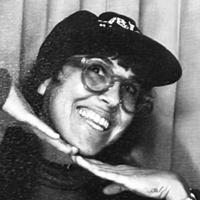
Devyn Defoe is a writer and bookseller from Sacramento, CA. A former Wallace Stegner Fellow, her work has been published by Socrates on the Beach and The White Review. Burnside is her first novel.
Conversation
On the importance of daily inspiration
Novelist Devyn Defoe discusses making work without easy answers, taking a while to find the right project, and the economic and social power of beauty.
As told to Nicole Sellew, 2339 words.
Tags: Writing, Day jobs, Education, Beginnings, Focus.
You did your MFA at Columbia and then you were a Stegner fellow. How did these experiences shape who you are as a writer?
I was super young when I started my MFA, 22 or 23, and I didn’t know what I was doing. Mostly I was just exposed to a lot of writers that I came to really love and rely upon at Columbia. I was trying a lot of different stuff out. I didn’t necessarily develop my voice there. But the Stegner Fellowship, I think I was 26 or 27. The first year I was still in that place where I was working on stuff that wasn’t going anywhere. And then the second year was really pivotal. I started Burnside that summer between the two years, and at first it was just the characters. Once I had that I was able to make some progress. But it took a while to figure out what kind of book I wanted to write. I felt like there were a lot of different directions I could have gone, and then eventually I latched onto something. But I was just reading a bunch and seeing what I liked and writers who were doing things that I thought were really cool up until that point.
It’s interesting you say the characters came to you first, because one of the most compelling things about this book was the characters and their epithets–like “the man who skims garbage from the river.” You have all these great characters that are sort of defined by what they do rather than names.
Totally. Some of the names did change. September had a real name before, so there were things that were always shifting. But the book Milkman by Anna Burns was a hugely pivotal book in terms of: “This is sort of what I’m interested in approaching.” But all of the characters in Milkman have names that are off base. The main character is just named Middle Sister, and there’s someone named Somebody. It’s names that are relational. Like how you refer to people in your neighborhood, or someone offhand. I liked that community aspect of naming where you just get deemed something as opposed to the name that your parents give you. That was where that came from.
Once the naming thing got going, Maya, my editor, definitely was like, “Can you make this person’s name weirder?” So that was also a cool way to develop some of those characters that were more in the background. They got to stand out a little bit that way.
Your main character doesn’t have a name, which I loved. And now I want to talk about autofiction a little bit. I know you’re also a bookseller, like the unnamed narrator.
I started the book in 2019, before I started working at the bookstore. So all of the bookstore parts are actually not based on real life. Some of the later scenes, especially with Burnside, came out of interactions I had at my job, but for the most part, the bookstore was an invention that sort of came to life in a weird way.
So it was prophetic.
Prophetic, yeah. It’s weird that that happens sometimes in my writing.
So now that you are a bookseller, does that inform your writing practice at all?
Absolutely. Especially working at a used bookstore, because we buy books every day, and you never know what you’re going to see. So just in terms of getting inspiration from different authors, it’s been huge. Getting in random stuff is mystical, in a way—what you’ll be delivered at the exact moment you’re thinking about it or having those questions. I do think it’s the best job for a writer, or any kind of artist, probably.
Is autofiction a tradition that influences your work at all?
I don’t know. I would say no, but definitely all writers draw from their life. I guess I’m curious about the definition of autofiction because I don’t know if I’ve ever really figured out what it means.
I’ll misquote, but Hari Kunzru calls it anything written in the first person where the narrator has a nebulous but close relationship to the author.
By that definition Burnside would sort of fit that. It’s not something I considered, although I’m working on a new novel now that is even more similar to my real life. So I probably am kind of following that vein, unintentionally. I will say, when I was at Columbia and then the first year of the Stegner Fellowship, I had this novel in my head that I was really into and I was trying to make it work. That was completely fictional. None of the characters had any sort of resemblance to me or anyone in my life. And it was just kind of dead in the water. I couldn’t get it to click in any way. So there was this moment where I realized I was wasting my fellowship. Then I abandoned that project and started something that I had some more innate familiarity with. So I do think that is kind of important to me: just having daily inspiration. I don’t know if I’m capable of writing another way.
So much of this book is absurd and crazy. Totally off the rails in the best way. There’s this beautiful part that I’m thinking of, towards the end, where Claudia Thursday tells the story of her marriage. And you take the reader down the path of this crazy story that goes on for pages and pages. It felt like listening to someone recount a dream. Do you keep track of your dreams at all?
I used to have a notes app where I would write them down. It’s probably still in my notes. I had very vivid dreams as a kid and slowly they’re going away, sadly. But the feral children part was based on a story my friend told me, about going to a random town in the middle of nowhere and walking into a store that was manned by a child sitting behind the register. So I think all the crazy parts are still true to life in a strange way.
I’m also curious about the fires in Burnside. You do a brilliant job of capturing what it’s like to live somewhere with that level of disaster in the air.
It was 2019, 2020, and there were so many fires in California, north and south. I think the Paradise Fire was the year before, when the whole town was pretty much burned down. So that was very much in the air at the time. I really wanted to write about the fires. I love writing about weather and how it makes people crazy. You see it all the time at the bookstore, especially when the seasons are changing. Like when it gets to be summer, people will come in and be really cranky.
So kind of prophetic again, because when I read about the fires, it was making me think of the really, really bad 2023 fires.
Oh, yeah. I feel like especially in 2020, I was just like, “Are we going to have shitty fires every year at this point? Most likely.” But yeah, no, it is the California weather and I guess Oregon and Washington. And there were fires in New York last year, too.
Yeah. It’s bad all the time everywhere. On that note of impending doom, I get the sense from your work that there’s disaster lurking just somewhere in the distance.
Growing up being hyper aware of global warming and climate change, especially in a time when people were still like, “Oh, that’ll be fixed. The politicians are on it,” I was always like, “Well, they’re clearly not. This isn’t going away.” And now it’s very obvious that things are quite bad, but I always was kind of embittered by that during the Obama years when people had hope for change. I was just like, “We’ll see.” But there’s not much that’s been done. And I was looking for books that said something about that. And now they’re starting to come out, I think. But it was an anger point for a while.
I remember reading something, seeing something on Twitter, maybe, in late 2018 or maybe 2020. It was something about publishing trends and how publishers wanted very hopeful books or “feel good fiction.” That’s not what I want to read. I want to read something that speaks to the world I know and the anxieties I have that I know so many other people have. I don’t really like the wool being pulled over my eyes.
That’s interesting you talk about hope, because I wanted to bring up the babies at the end of the book, all these women getting pregnant and preparing to become mothers. Do you view that as optimistic in any way?
I think it’s a question that women our age have been talking about amongst ourselves for so many years. And it’s not that I’m totally pro-baby, but I think we’ve had to face this kind of existential question that’s also a very personal question: How do we look into a world where there’s potentially all this disaster and usher life into it and say, “This can be okay?” How do you do that? And so I think the book doesn’t answer the question. I can’t answer that for anyone except myself, but I think I haven’t seen that discussed in fiction necessarily, and I kind of just wanted to put it out there. How did you read that? I’d be curious.
It’s what I loved so much about the novel, that madcap absurdity where all these women are all of a sudden getting pregnant. But I think with September, it felt to me like a foil to that act of extreme violence at the end of the book that she sort of brings about, almost like she took someone out of the world and now she’s bringing someone into the world. A reciprocal element.
Yeah, it’s tricky. I don’t know. Some people read the desire to be a parent as maybe narcissism, or just wanting a carbon copy of yourself. Or doing something and not thinking of the consequences. That is the quintessential role for the woman. Just fully going into the patriarchy of it all, wanting to be the trad wife.
I would love to talk about the character of September. She’s described over and over again as being so beautiful, and she works at the cowgirl-themed “breastaurant”—amazing portmanteau. But she’s such a sympathetic character, and maybe it’s just because she’s beautiful. I’m always sympathetic to a beautiful woman. I would be curious to know how you constructed her and how you wanted the reader to view her.
Definitely. It’s a very complicated relationship, I think, between the narrator and September. I think there’s a lot of resentment on the narrator’s part for September being so self-focused. But that’s also a flaw in the narrator, that she’s not at all focused on herself. And we don’t really love to hear beautiful women complain because they’re so beautiful, but there’s this element of beautiful women not being taken seriously, or their looks preceding their intelligence. September is smart enough to know what’s going on in the relationships in her life. She knows how she’s perceived, how she can monetize that to her advantage, and how her beauty is this power she can wield economically and socially. She makes the choices she does to get out of the bad deal of being a woman and not being an equal participant in society, or never being seen as human on the level that men are. So ultimately she never gets out of the trap of the patriarchy, but she wields it to whatever advantages she can. And I think the narrator sees that as well, but she takes the rawness of that deal personally. But September’s is a pretty hollow life, ultimately.
My last question is a very superficial one, while we’re on the topic of beauty. I want to talk a little bit about the cover, the painting on the cover, and just the book as object in general. What was the process like for deciding on the cover, with its lovely painting? And the book is very anti-capitalist and feminist, so I’m also curious how you feel about the book as object in general.
As a bookseller, I appreciate beautiful books so much. I love the older vintage versions of Grove Press books, and stuff like that. Books are going to be sold anyway, I guess, and so I do think they should be as beautiful as they can be. If you can put a beautiful painting on a book, that’s such great real estate for art of any kind.
And then my editor Maya has this friend who’s just an incredible painter. There were a few paintings of hers that we considered–one that I really, really loved, and I originally thought it would be that. But even when I first saw the painting we ended up going with, thematically it just worked so well. It’s kind of the entire book in a way. The shadow on her hand is so perfect. So yeah, I think it was kind of the obvious choice. But I’m very happy with the cover.
It’s gorgeous.
Yeah.
The book’s beautiful.
It’s a good one. They gave me a lot of great options, and I kind of fell in love with a different one. But then when we eventually did this one, I was very happy it was the one we picked.
Devyn Defoe recommends:
Crossword puzzles (my coworkers and I have gotten really into them lately—we’re working through a book of NYT Wednesdays)
Yadom inhalers
Bataille on sovereignty
- Name
- Devyn Defoe
- Vocation
- writer
Some Things
Pagination