On the way time and money clarifies your artistic values
Prelude
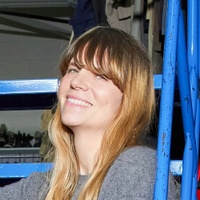
Morgan Nagler is a Los Angeles–based singer-songwriter, founding member of Whispertown, and a sought-after collaborator for artists including Phoebe Bridgers, HAIM, Madi Diaz, and Kim Deal. She recently released her acclaimed debut solo album, I’ve Got Nothing to Lose, and I’m Losing It.
Conversation
On the way time and money clarifies your artistic values
Singer-songwriter Morgan Nagler discusses how collaboration can help you appreciate your work from new angles, working with limitations and the value of connection.
As told to Jennifer Lewis, 3067 words.
Tags: Music, Collaboration, Process, Success, Mental health, Time management.
Listening to I’ve Got Nothing to Lose, and I’m Losing It, I was struck by how much wisdom is in these songs, especially “Cradle the Pain” and “Crystal Ball.” I hear a kind of hard-won realism. I’m curious whether those songs came from a place of knowing, or whether you were writing your way toward understanding something yourself.
That’s interesting because those songs came from different places. “Cradle the Pain” began as a letter to a friend, but years later I realized I was really writing to myself. The gift of putting something on paper is that you can come back to it later and discover it was medicine you needed all along.
Do you often start songs by talking to just one person?
Sometimes. But when I’m writing for myself, I try not to think too much about who I’m talking to. My goal is to bypass the filter of my conscious mind and see what comes forward from the unconscious. Often, I only understand what a song was about years later. Looking back now, I can see that much of the record was processing a breakup I didn’t yet realize was coming.
After years of helping other artists find the shape of a song, is it easier to help someone else say what they’re trying to say than it is to do that for yourself?
Other people’s lives are easier to see clearly than our own. When you’re looking at someone else’s work, you don’t have all the baggage attached to it. You’re just seeing what’s there. Editing is everything. I’ve watched friends make films and seen the same movie in multiple cuts. The entire tone can change. The meaning can change. The footage is identical, but the movie becomes something completely different.
You often describe those six months writing with Gillian Welch and David Rawlings as your version of music school. What did they teach you that you couldn’t have learned on your own?
It wasn’t planned. I got a call asking what I was doing tomorrow and whether I wanted to come to Nashville. A plane ticket was booked that night. I ended up staying for six months. They would fly me home if I had obligations and then fly me back.
It was basically my music school. We’d start with a title, a melody, or an idea. Then we’d all disappear into separate rooms and write. Later we’d come back and hand our notebooks to David. One thing he taught me was never to cross anything out. Even the bad lines might contain something useful. That experience completely changed my relationship to revision. Before that, I had what I called the “puke method.” Whatever came out was the song. I didn’t question it. Gillian and David taught me that if you don’t like something, you can change it. You can make it better. Craft matters.
Another thing I love about the record is how surprisingly generous and funny it is. What role does humor play in your work?
A huge role. Everything is about perspective. If you can’t see the humor in things—or throw your hands up at what might otherwise look like failure or disappointment—you’re going to have a rough time. Humor is one of the best tools we have. A lot of the songs acknowledge that life is hard. Things are broken. Things hurt. But there’s also beauty. There’s also hope. It’s a practice to remember the other side of things.
I think one of the dangers of songwriting is that sadness naturally generates material. When you’re happy, you’re usually busy living your life. When you’re hurting, you need an outlet. So, if you look at a body of work, it can seem sadder than the person who wrote it. It’s important to me not to leave people without hope. Especially now. It feels inappropriate to add more darkness to an already dark world without offering some sense of possibility.
I was at Pappy & Harriet’s watching Rilo Kiley when “Dreamworld” came on. I turned to Orenda Fink and said, “I love this song!” She replied, “Morgan co-wrote that.” It made me think about how many people connect with songs you’ve written without realizing they’re yours. What’s that like?
I think I’m able to appreciate it more because I’m not the one performing it. In the case of co-writes, I can kind of step back and think, “Oh, that’s cool,” without all the complicated feelings that come with performing your own work. I don’t really feel like, “I wish I had more credit for that.” This press cycle has actually been the first time people have written about my work in a bigger-picture way. That has felt meaningful.
What has it felt like to have people recognize the full scope of what you do?
I think it has coincided with respecting myself more. I’ve been doing this for a long time. And one of the things I wanted to talk about was age. Why is it that we discount the wiser opinions and are more impressed if a seventeen-year-old knows how to play the guitar? Sexism is in there, but it’s more than that. There’s something contradictory about how we value people.
In the press, you’ve talked about having blind faith in music and continuing to make art despite the economics of songwriting. At what point did simply continuing become its own form of success?
I’ve never really questioned what I feel my purpose is. I’ve questioned whether it’s financially sustainable. But every time I do, I come to the same conclusion: I can’t imagine doing something else that would make me feel connected to the world in the same way.
I feel like my soul would die if I wasn’t doing it. Eventually, you reach a point where you have to clarify your values. If money is the most important thing to you, that’s completely valid. But then you should probably do something else. For me, the work itself has always been the thing.
My manager always says, “You’re gambling on yourself.” And that’s true. The problem is that this is all spec work. You’re working full-time on something that may never pay you. So, you have to be selective about what you’re gambling on. I’ve become much more protective of my time because time is the most valuable thing I have.
That’s what fascinates me about creative labor. People look at the finished product and assume success happened overnight. They don’t see the years of unpaid work underneath it.
Exactly. Most success stories are really one thing finally working after years of things that didn’t. The visible success is often just the thing that happened to hit. Everything else was practice. Everything else was labor. Everything else was faith.
What do you tell young people who want to become songwriters?
I always say the same thing. If there’s anything else you can imagine yourself doing, you should probably do that. And I don’t mean that cynically. I mean that honestly. Because this work asks a lot of you. It asks for years of commitment with very little guarantee. But if it’s the only thing you can imagine doing, then you’re already committed. There’s really no quitting. There’s only continuing.
From the first time you hit a point where you can logically look at your life and say, “This doesn’t make sense on paper. I’m doing all this work and I’m not making any money,” you have to decide what’s important to you. If it’s money, then you should do something else.
When I quit acting, I had been fairly successful at it. I had been making a good living since I was five years old, and I didn’t quit until I was twenty-six. I knew I was trading money for what I wanted to do. It was a very conscious choice.
When I question my situation, I try to imagine if there’s anything else I could see myself doing and still feel connected, or like I’m helping the world in any way. The answer has always been no.
I think it’s about clarifying your value system for yourself and putting value on what you actually find valuable in a real-life, day-to-day way.
This is still a struggle for me. I work for free a lot because I love what I’m doing, but I have to keep reminding myself that I still need to value my own time.
What I’ve found is that my time is so valuable. If my time is taken advantage of—for example, if someone’s not prepared, or they cancel last minute—it’s like, no. This is my time. This is the most valuable thing to me.
I thought I was diversifying by doing co-writing. I tried to boil down what my favorite part of what I do was, and I came to the writing. But it’s still the system. The system is broken.
Just so I understand the structure: as a songwriter, you write on spec with someone?
Yes. Technically every time you’re writing for yourself, you’re writing on spec. But in the co-writing space, you show up at a time and place. You drive there. You write the song, either with just the artist or, more often, with the artist and a writer-producer, so you leave that day with a pretty good-sounding demo.
For the most part, my job is done. Then the artist may or may not release that song. They usually write a lot before deciding what they’re actually going to release. If they do release it, the chances of it making money are not great.
The structure is hard to understand. It’s just hard to make money.
But you don’t get paid to show up?
There’s no fee. That’s something I’ve thought about a lot. If you’re dealing with major-label artists, which I do, that seems wrong. If you want to work with an independent artist, that’s your choice and you can gamble. But with a major-label structure, if they have a five-hundred-thousand-dollar TikTok budget, they can’t pay a day fee?
Not even a one-time fee? I come from a family of plumbers. You would never go fix a sink and not get paid for the three hours you were there. It’s so weird to work in an industry where you don’t get paid for your work, and the work is time-consuming and specialized.
In co-writing, they don’t have a song without you. But it’s a bottom-line business. Since that’s not how it works right now, nobody’s going to decide to pay when they don’t have to.
It does seem messed up. What other job can you work all day and not get paid for your gas?
It’s truly bizarre. That’s why you get an advance. And even that isn’t much for the amount of hours you’re working.
My manager always says, “An artist in motion stays in motion.” That really struck me during the King Tuff tour. Part of me was questioning whether it was worth doing, purely from a financial perspective. Then the Greek opportunity came along. If I hadn’t been out playing those songs every night, I would have been much more nervous. It reminded me that you don’t always know what something is preparing you for. You do the work because you love it, and sometimes that work becomes preparation for something you couldn’t have anticipated.
So, when the Greek opportunity came along, what was it like playing that show?
I got the offer about five days before. My first thought was: That seems insane. Not just because it was the Greek, but because I was opening for Echo & the Bunnymen. I didn’t have enough time to assemble a band and rehearse properly, so I found a guitar player who could sing and was available immediately.
From the moment I said yes, I felt nervous. Then something strange happened. The morning of the show I felt calm. Soundcheck felt great. Then, right before we went onstage, this bizarre British guy in white snakeskin boots wandered into our dressing room and just stood there. We had eight minutes until stage-time and nobody knew who he was. I’m introducing everyone, offering him food. Trying to figure out what’s happening. Then they tell us it’s time to go onstage.
As we’re walking out, Susanna Hoffs suddenly appears and says, “Morgan! I didn’t know you were going to be here!” You know who Susanna Hoffs is, right?
Of course. From The Bangles.
We’ve spent several months together writing songs, so now I’m hugging Susanna while people are saying, “You need to go onstage right now.” I remember getting down on the ground for a second and just centering myself. Then we walked out.
And once you were onstage?
I felt good. I skipped a verse in one song. I knew it immediately. But honestly, I felt comfortable. I think it’s another getting-older thing. You start thinking: This is what it is.
I thought I had done my homework, but I didn’t know you’d worked with Susanna Hoffs.
It was about two years ago. A producer friend of mine introduced us, and we spent a few months meeting on Saturdays and writing together. Nothing has been recorded yet, but it was really fun. She’s a sweetheart.
When I saw you open for Madi Diaz at the Independent in San Francisco, it struck me how exposed the performance was. It was just you, a guitar, and the stories between the songs. There was nowhere to hide.
I think that’s the point. Otherwise, why share it? Technology makes perfection incredibly easy. Everything can be tuned. Everything can be fixed. Everything can be polished. Which means authenticity becomes more valuable.
I feel that as a listener. Sometimes I’ll hear technically perfect singers and feel nothing. Then I’ll hear someone reaching for a note, and I’m engaged.
Exactly. I think live music should be different from the record. If you want to hear the record, you can listen to the record. The live performance should be a unique experience. It should feel human.
Do you ever have writer’s block? Or do you ever feel pressure now that you’re becoming more well-known as a songwriter?
I think I’ve had the luxury of not being that successful. So, I haven’t experienced that too much. I just had a hint of it recently, and it wasn’t really writer’s block. I was still writing a bunch, but I was thinking, I don’t think I like what I’m writing. Which is also fine. I always tell people when they have writer’s block: commit to writing three bad songs. When I was younger, I was mortified of being cliché or having a terrible metaphor, but now that I write all the time, I know that it’s just part of the process.
With songwriting, do you write the basic skeleton first? Do lyrics come first? A chord progression? Melody? A mumble track?
Often lyrics will come to me in a melodic cadence, and then I’ll pick up the guitar. Sometimes I just pick up the guitar and do it all at once and see what comes out. But I’m definitely more lyrically and melodically focused. Usually, the lyric comes to me in a rhythm that’s already kind of melodic.
I’ve always loved that Patti Smith has been very clear about thinking of herself as a writer who makes music, rather than the other way around.
That’s definitely how I feel. I play very basic chords, and I think that’s maybe why the songs can come across as nostalgic. They’re basic, but they’re also tried and true. I’m limited because my motivation comes from writing. Once I can achieve that, it’s hard to push much further on the guitar.
Totally. But sometimes limitations are good.
That’s what I mean. Sometimes it’s hard for people to latch onto something because the chords are all over the place. Or they can’t play with other people because their songs are so complicated that no one else can really join in. Then seven years go by, and no album gets made.
You just get in your own way. You don’t want it to be over because that’s when the judgment comes. That’s why it’s so important to detach yourself from judgment as much as you can. It’s not easy, but it really is the key. If you’re aiming to please people, you’re usually copying them. You’re being very influenced by something that you think people will like, and I think everybody’s mutual goal in art is to make something new.
When I saw you play in San Francisco, it struck me how present you were. I wondered whether that confidence came naturally, or whether it was something you had to learn.
It’s been a journey to get there. I started off very nervous. I didn’t even want to perform when I first started writing. Jenny Lewis really pushed me. Part of it is because I’ve had so many issues with my voice, so there’s this whole other element to be nervous about: Will I be able to actually sing the way I want to?
I heard someone talking about public speaking, and they said the reason you’re nervous is because you want something from the audience. You want their approval. You want them to like it. If you reframe it as giving something, that changes things. That really helped me. It’s not because you think you’re so great. It’s just sharing. You’re trying to connect. So why are we getting in our own way and stopping ourselves from the very thing we’re trying to do, which is connect with each other?
Morgan Nagler recommends:
The Witch’s Daughter by Orenda Fink: A can’t-put-it-down memoir about nature, nurture, and extraordinary personal growth.
The Lost Voice by Greta Morgan: An incredibly moving memoir about detaching from learned identity and connecting to the true self.
The Gift: Poems Inspired by Hafiz, the Great Sufi Master by Daniel Ladinsky: Because it is the greatest gift.
Driving with the seat heaters and the AC on at the same time.
Sleeping with the (screened) windows open as much as possible.
Rewatching Twin Peaks and Northern Exposure.
- Name
- Morgan Nagler
- Vocation
- singer, songwriter
Some Things
Pagination