On making the thing you can't look away from
Prelude
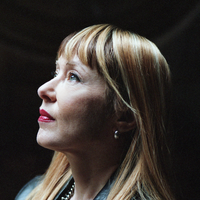
Max Lawton is a writer, musician, and translator. He is currently working in close collaboration with Vladimir Sorokin to publish all of his untranslated works in English. Max is also currently working on or has plans to translate works by Antonio Moresco, Stefano D’Arrigo, Alberto Laiseca, Fyodor Dostoevsky, Eduard Limonov, Louis-Ferdinand Céline, Hans Henny Jahnn, and Miquel de Palol. His first novel Progress is coming out with Verso in 2027. His translations have appeared in The New Yorker, n+1, Harper’s, The Baffler, The White Review, and Joyland. He lives in Los Angeles, where, when he isn’t writing, he plays heavy metal and noise music.
Conversation
On making the thing you can't look away from
Writer and translator Max Lawton discusses transgressive art, building a serious routine, and not getting beat up at Oxford.
As told to Alexa Margorian, 2845 words.
Tags: Translation, Writing, Collaboration, Focus, Time management, Education, Beginnings.
Being a translator is confusing to most people. How did you get into this line of work?
The way I like to put it is that it’s being the business class version of a reader. If there’s a book in a foreign language that I really want to get to the bottom of and really want to spend an enormous amount of time with, the best way to do that in a way that doesn’t just mean I’m a shut-in at libraries with no money is that I get paid to put it into English. I obviously am a writer, but it’s pretty hard to be a writer these days and just a writer. Being a translator is a great form of being an apprentice for being a writer because it’s like you’re writing on a treadmill.
Translation is, I think, easier than writing. Sometimes translators say it’s harder than writing. That’s not true, because writers have to deal with ontological questions. “Why am I writing this? What is this? What is the point of this? Should I be writing this?” Whereas translators deal with every other question about writing. They deal with every micro question, but they don’t deal with the big questions, and the big questions are really the killers.
While writing fiction, how do you approach those larger questions?
I think I belong to the Henry Miller School of Writing—not content-wise—where I can just go. One of the things I will need to work on is slowing down and being more meticulous. I also think about it in terms of music like Michael Gira thinks about music composition. He’ll have this motif or this phrase, and then he gets the band to recalibrate around that and develop in certain directions that are predetermined, but not so minutely. That’s sort of how I write—it’s just like surfing. You’re going in this direction, you have this idea, you surprise yourself. It’s just so different from translation. It’s more visionary than translation. You can really lose yourself, and then you come up for air and you’re like, “What even is this?”
Do you find that you’re plotting things out when you’re working?
I definitely have an outline, but it’s not a very detailed outline. I’ll have things I want to hit, like images or places or a vague shape of what should happen, but it’s not that detailed. I think all writers have a different method. When you want to be a writer, you have so much bottled up and a lot of it comes from you. Whereas the really interesting thing will be forcing myself to just take myself out of the equation entirely, to write about other people, other imaginary people. In a Hegelian sense, there’s something profound about the recognition implied by writing about others who are not like you. That’s part of the magic of being a writer that is less and less at play in what people write. I mean, I love autofiction when it’s good—I’m an autofiction defender big time—but I do think there’s an art to Tolstoy writing about Natasha Rostova in War and Peace and fully inhabiting her. She feels like a real-ass person, and I think that’s cool.
Do you find there’s a through line between all the pieces that you’ve worked on? Because I feel like they’re a little bit difficult.
An element of transgression, whether that’s on the level of language or on the level of content. When I was younger, part of what got me into art was being naughty because I’m a very mischievous person. I checked out American Psycho, JG Ballard’s Crash and Trainspotting from the library, hid them under my bed, and my parents found them. They’re like, “You can’t read these.” My dad’s like, “I’m not going to let you get your driver’s permit if you read this book,” for Crash. And that’s true of music as well. I still remember checking out The Downward Spiral [by Nine Inch Nails] from the library and burning it for myself. I was reading the lyrics for the songs “The Downward Spiral,” “Big Man with a Gun,” and “Heresy.” I was like, “I’ve got to take these off of my version.” The 11-year-old Max listened to clean Downward Spiral with just three missing songs. That was what got me into art; shocking movies, transgressive music, loud music, not as a form of real rebellion, just mischievousness, and then I moved from that to being actually somebody who’s interested in art, not just for the free song of shock, but for what it is.
I have a hard enough time keeping track of books coming out in English. How do you keep up with everything in a way that doesn’t make you feel crazy?
I don’t, to be honest. I used to listen to writers talk about this and be like, “Well, this is so lame and sad,” when writers say, “I can’t read as much now because I write.” I was like, “That’s bullshit,” and now I’m like, “Oh no, that’s really true.” Will Self said to me, “A great theme for every writer is the reader they would’ve been if they hadn’t been a writer.” Working with books necessarily changes your relationship to texts. I end up reading a lot of classics. I’ve read all of Joseph Conrad. I’m finishing up Henry James. I don’t really know why that is. It’s weird. You just read differently. It kind of sucks.
How do you avoid being burnt out?
I work pretty consistently for six or seven hours a day, and I just force myself to do it. William T. Vollmann, he probably averaged 1,500 pages [per year] for his whole career, if not slightly more, and they’re very dense, meticulously constructed pages. I’m probably not even close to that. There’s a backlog. I was working from 2016 to 2022 without anything getting published with Sorokin. Now the schedule has caught up to me, but I definitely don’t want to keep working like this past 2032 or 2033. When I turn 40, I can chill a little, I hope. Until then, I’m just working really hard, because when you’re given an opportunity, it’s foolish to turn it down.
Have you been able to still derive pleasure from reading in the same way? How do you compartmentalize the work aspect of it versus still actually enjoying the thing that you loved when you were 11?
Reading older stuff disables the work brain. If I read someone else’s new translation, no matter how good it is, I’m thinking about it as a translation or a piece of work. If I’m reading a new book in a language I read, I’m like, “Should I translate this? This is kind of cool.” Or if I’m reading a book in English, I’m like, “This is positioned in this interesting way. What do I have to say about this?” It’s fraught, whereas when I read something like Wilkie Collins, I’m not like, “Where’s Wilkie getting published? What’s the deal with Wilkie? Wow, his advance was a little big for how good this is.” It’s old. That part of your brain almost doesn’t work in the same way.
I really loved The School of Night last year. There are always books that manage to transport me in that way. Really, the platonic ideal for reading for me is reading The Stand, hidden away, sitting in a corner of my room, so if my parents came in, I could hide it. As I was reading, I felt like, “This is unbelievable. I’m totally in this world.” The pages, you gulp them down, you can’t stop reading. You read as you eat your cereal in the morning before school, you read on the bus, you read on your desk. That was so sick. There are some books that unlock that, but I mean that’s part of being young as well. When I retire to Sicily, then I’ll read like that again. I’ll read all the Stephen King books again.
What does your schedule actually look like on a daily basis?
I wake up probably around eight, have coffee. I quit coffee for a while, now I’m back on it. I’m a coffee junkie, unfortunately. You do sleep better without it, but it does give you a nice little rush, and then I just work till probably two or three with interruptions, go to the gym for a few hours, then come home, work for an hour or two more if I need to, and that’s it. At night, I try not to work.
It’s very 9-to-5 regimented in a way that is surprising to me.
That explains why there’s so much, and I don’t think people who type for a living generally work regular hours like that. I mean, Murakami does, he’s written a lot of books, Vollmann does. Writers who are very prolific just sit and type all day. There’s no real magic to it, and maybe the best compliment I’ve ever been given is that Bill Vollmann said I’m a graphomaniac after his own heart.
Writing on your own is very isolating, but being a translator is a little more collaborative.
That’s true. Talking to my editor or asking the author questions. It’s still very isolated, but I’ll get on the phone with Francesco Pacifico, who I’m working on Moresco with and we’ll laugh a lot at gibberishy parts that neither of us understand. It’s like a team. That makes it sound like I think I’m a celebrity or something, but I mean we’re a team working for these books. It’s not a team working for me. It’s the authors I work with, the editors I work with, the proofreaders. We have a very nice community and I talk to a lot of people every day just texting or on the phone. So in a way it is isolated work, but in another way, I’m just really lucky to be surrounded by the people who I am [surrounded by], whether it be the publishing staff at NYRB in Deep Vellum or Andrei of the Untranslated or Matthias Friedrich, my German editor, or Francesco or Pablo Maurette, who is editing my translation of The Sorias, or the older authors who are sort of mentors to me.
Vladimir is like that, Will Self, Bret Easton Ellis, Bill Vollmann, I have a lot of support in a way that allows me not to feel as lost. Vladimir was the first back in 2016, when I first emailed him. He’s the reason I was able to keep going. Without him, I would’ve been lost in the wilderness and I would not have the career that I have at all, or necessarily be a writer. Having faith in yourself is hard.
What did you email him in 2016? Asking to translate his work?
I sent him 80 pages of Blue Lard. I was right out of college and I was going to Oxford for my Master’s, but I was like, “What am I going to do with my life?” Because the Master’s at Oxford—I guess they’ve given me my degree, so they can’t take it away—are kind of set up just to earn money and you don’t work that much. I was at Oxford, didn’t have friends yet really, and I was like, “What am I doing?” Oxford’s really weird. People think it’s the Shire, but it’s actually not that nice. I love it now, but, for example, there’s the Radiohead song, “Wolf at the Door” that’s about Thom and maybe Johnny getting beat up. When I heard about that when I was a kid, I was like, “Getting beat up at Oxford? That’s crazy.” Now I go, “Okay. Yeah, it makes sense.”
My solution to the malaise of just being out of college was to be like, “I’m going to be a translator.” I did 80 pages, I sent it to Vladimir, and he was like, “Let me see a picture of you.” I sent a picture of me and he was like, “You’re hired.” A Russian director who I’m close with said to me, “Sorokin is a beast.” He’s a wild animal in a way. He wanted to sniff me a little, which is true. There’s something about him that’s a little bit like a wild animal in a good way.
What is it about this kind of work that still makes you excited? Why have you chosen to do this? Because I feel like there’s a lot of easier things that you could have done with your time and your energy.
I have no idea. There is a way in which it does have a social utility or an ethical utility, especially in this age of AI slop. Using generative AI for any creative stuff, you should go to hell for that basically. It’s not real art. It’s horrible. The idea of AI art is like, “Oh, let me use Google to write a novel.” It’s just nonsense. I am very proud of the excessive human affect in all the novels I work on, even Schattenfroh, which has this alienated German tone that doesn’t feel all that human. It was human-created, but it’s like a collage book. The Moresco, on the other hand, really, really should feel deeply human created. You can feel the intentionality and effort behind every word, and it’s because it’s a product of not only me, but Francesco, as well as our editor, our proofreader, it’s all of us in this dialogue and we mull it all over so much, and it’s an enormous amount of attention and time. It’s a monument to uselessness in a way that’s really beautiful, really human.
I get those ads sometimes that are like, “Why read a whole book? Let this AI app digest books for you and you’ll have read the whole book in five minutes.” I’m trying to be slower with the way I read, too. I read Absalom, Absalom! and I was like, “I don’t like it that much.” Then I thought I needed to read it more slowly, so I downloaded the audiobook and I’m listening as I read just as a way to pace-set because otherwise I start flying and it’s different.
I don’t like to frame things in terms of social utility because it feels boring and not sexy, but there definitely is something to be said for the fact that these books do stand against the whatever mores of the times in a way that is valuable and useful. They’re so nasty and transgressive in certain respects that I guess the sexy part can come from that. The second Moresco book, Songs of Chaos, it’s a thousand pages of anal sex written as if it were a William Blake poem, and it’s like, this is insane. That’s amazing because I get to have my cake and eat it too. It’s like, “You’re reading a thousand-page book. It’s good for you. It’s not TikTok. It’s human created. No AI here!” But at the same time, it’s like, “Okay, this is pretty Gaspar Noé-ish.”
There’s something that forces you to pay attention. There’s not that much that’s doing that anymore. It takes a lot to have things feel singular, not in terms of being unique, but more of, “This is the only thing I’m paying attention to right now.”
For me, the platonic ideal of what it means to be an artist is there’s this video of Gaspar Noé coked out of his mind walking into the Irreversible premiere at Cannes, and it’s a TikTok edit where it’s playing badass music [Max imitates the techno beat of the TikTok], and he’s just walking in knowing the thing that he’s made, this formally impeccable, hateful, vile, crazy thing, is a bomb that you can’t look away from. That’s what I’d like to do. That’s how I want to be, basically.
Max Lawton recommends:
Ploughman’s Lunch: Toast sourdough bread, spread a bit of butter onto it, then eat it with a strong cheddar or a Stilton and raw onion. My ideal lunch.
Live Rope by Swans: Now that “big sound” live Swans is dead, all we have left are these beautiful and perfect live albums. I often have them on repeat as I work.
Read Hegel: Reading Hegel teaches you nothing but how to read Hegel, yet that tautological knowledge also seems to contain within it the whole history of western thought.
Listen to Wagner operas all the way through: It doesn’t count as liking Wagner if you only listen to the preludes
Take long walks in unexpected places: My friend Riley and I are walking the whole latitude of LA on 4/20. Calabasas to Pasadena. On ugly Valley roads. 30 miles. Pure psychogeography.
- Name
- Max Lawton
- Vocation
- musician, translator, writer
Some Things
Pagination