On what money does to us
Prelude
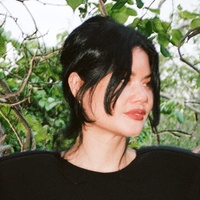
Mona Chalabi is an award-winning writer and illustrator who uses data as the foundation for her work. By translating complex statistics, Mona has earned a Pulitzer Prize, fellowships at the British Science Association and Royal Society for the Arts as well as an Emmy nomination. In 2025, she was named a Royal Designer for Industry. She is a lecturer in Graphic Design at Al-Quds Bard College in Palestine. In recent years, her art has been exhibited at the Smithsonian Design Museum, the Tate, the Brooklyn Museum, and the Design Museum. Her work can also be found at The New Yorker, The Guardian, Netflix, NPR, the BBC and National Geographic. She is also the executive producer and creative director of an animated TV show with Ramy Youssef and A24. She studied international relations in Paris and Arabic in Jordan. Mona’s first book Ten Lives will be published in November 2026.
Conversation
On what money does to us
Writer and illustrator Mona Chalabi discusses work ethic, information versus transformation, and what it costs us when we don't talk about class
As told to Jun Chou, 3555 words.
Tags: Writer, Illustration, Time management, Success, Failure, Money.
Tell me about Ten Lives.
The goal of the book was to find someone in the richest 10 percent, then the next 10 percent, the next 10 percent, all the way down to the poorest 10 percent, and to take those 10 individuals and understand how money shaped their lives. I initially said to the publisher I would write in 18 months. It ended up taking six years.
The benefit of it having taken so long was that I followed these individuals for many years and saw how their lives changed. Two of them went through a divorce. My life also changed in ways I didn’t expect. I write a lot about myself in the book, which is uncomfortable, but felt necessary because I’m calling for more radical financial transparency. It feels important for me to practice what I’m preaching.
Was the uncomfortable part around money or talking about yourself?
Not just money. First of all, I literally spell out in the book how much money I earn now, how much money I’ve earned over the last six years, how much money I have in wealth, which I think is one of the most revealing things. In order to actually be honest about those things requires talking about all of these other things that feel super personal to me, like my romantic relationships and whether I had someone to rely on financially, my family relationships, and the people I was financially supporting. It ends up being a real portrait of someone’s life in every respect.

What surprised you about the process?
I wasn’t expecting it to be as hard as it was, if I’m honest, because I’m a journalist. I write nonfiction all the time. But the longest thing I’ve probably ever written was 2,000 words. And the book is 60,000 or something.
You don’t understand what’s going to resonate. You could work for 10 years on a book that is so fucking obscure and publish it the same week some enormous news story happens. There is an element of luck to it. At the same time, it feels like I can put in the effort, do these social media videos, send out these emails…But it’s exhausting. I thought my work was done when I’d written the book and I have so much more to do.
Why did you decide to focus on America for this book?
I’ve lived here for 12 years. Understanding the way capitalism works here is really essential for understanding the way that capitalism works, period. This country really matters to me. This is where I’ve built my career. This is where the vast majority of my friends live, my community. I’m an immigrant and I don’t have citizenship, but this is home.

What would success look like and what would failure look like?
I want the publisher to be happy. I want them to feel like it did well. Part of success to me also means people finding themselves in the book. If you do data journalism well, people can find themselves in every chart.
I talk a lot in the book about intersectional identities, the way I might rattle off cis-Arab-woman with absolute ease, but class doesn’t really get onto that hyphenated thing. Class absolutely has to be in it. It’s part of our identity but it’s the one that’s not really spoken about. I find it telling the way so many people can describe themselves as middle class in a way that isn’t accurate. I hope it expands those class identity markers.
It’s too ambitious to say I’ll be starting a new conversation. There’s a lot of conversations about class, but maybe I can contribute meaningfully to an existing one and shift it. We all need to better understand our place within this class system and the roles. Just like how when we talk about race, white people have a different role in anti-racism than we do. It’s the same when it comes to class dynamics.

I might not be in the 1 percent but I have more money than a lot of people in the US, so I have a different responsibility when it comes to addressing economic injustice. Part of the message of the book is to hold yourself accountable to what power you actually have.
We are meeting in the West Village, one of the most expensive neighborhoods in New York. I don’t live here but I am staying with friends who are very affluent and are able to just put me up in their spare bedroom. That in itself is a huge privilege that I can stay here for 10 days. I am saving well over a thousand dollars by staying with them.
I actually feel relieved I didn’t grow up in extreme wealth. I don’t think I would be sat here with you if my parents had been able to pay for me to have a little West Village apartment. The economic class I grew up in has informed who I am and what I think about the world, and how I move through it.
And you can’t help but think, “God, that must be nice.” Not just the material comfort of it, but the psychological ease of knowing someone has your back. If I were to lose all of my money tomorrow, there is not a single relative of mine who can bail me out. That really changes my psychological attitude.
Do you think that contributes to your work ethic?
Definitely when I was younger. I have financial security now, a good amount of savings, earning an okay amount each year. I don’t need to take on a contract that isn’t ethically sound.
The other upside is when you don’t have that mentality of take, take, take, you’re also leaving other work on the table for other people to pick up. Sometimes that means that those other people actually have more money than me and they’re just scooping up. But sometimes it might be someone who has less money than me who can get an opportunity they might not have gotten otherwise if I was like, “Let me do that as well.”
I’ve always admired how your work sticks to your values.
Yes, I didn’t grow up in affluence, but for example, I was raised in London, which meant that I could do unpaid internships during each summer that helped my CV. If you’re, let’s say, a northerner in the UK and all the great internships are in London, you don’t get that.
There are other types of privilege. My mom did support me as well, especially when I first got out of university. It’s not that I was completely always out on my own. That also gives you a bit of security to be more ethical. At the same time, a lot of people kind of sell out by being like, “Oh, I had to.” It’s quite a convenient excuse, sometimes.
The amount of people who I went to university with who were activists and then got out of college and worked for Facebook…
It’s ultimately about choosing money. It sounds gross and crude to put it that way, but they chose money over other things. It’s fascinating the way people can bend themselves in pretzels to justify that.
Is there a world in which we can escape that, being in a capitalist society that is probably going to keep being a capitalist society?
The starting point is more honesty. We’re not honest with one another about any of this stuff.
To go back to your example of friends that work for Facebook, it’d be quite radical if they told you exactly how much per year they were earning. I find it shocking that even between close friends, we don’t know how much money the other person has. That does change relations. One of the reasons, for example, why I left the UK is because the British people are very shit at talking about race.
Growing up, I was close friends to a white girl. Very, very close. Her family were just insistent they don’t see race. We’re the same. It was never a conversation about race. They found it upsetting and distressing the way I would keep on talking about it because they were like, “But we accept you without seeing your race.” And I was like, “No, I want you to see my race.”
If you transpose that over here to a conversation about economics, people are like, “You’re my friend. Money doesn’t come into it.” But money does come into it. Money shapes who we are. And how different would eating out be if you were eating out with a friend who had told you, “I stand to inherit $10 million from my grandparent who is currently quite unwell, and I earn $400,000 a year.” And you know what? Maybe they would feel some pressure to pick up the check at the end of the dinner, and maybe they fucking should.
The whole point of acknowledging white privilege is so you act differently. That same thing can apply to economic privilege.

Have these conversations transformed your relationships and dating and friendship and community?
I wouldn’t say transformed. It’s informed. I once dated a very wealthy guy. That was completely different to anyone else I have ever dated before. I saw how growing up with money informed who he was, and not for the good. It was the first time I ever pitied a rich person. I could see how much it fucked up him and his brother. Neither of them were able to build careers because there was no sense of urgency or financial need. It affects your place in society and in friendships to not have anything to fucking say.
He had nothing to say. And I felt bad for him.
When I got some money, I bought my house in London. I put all of my money into that. To have a nice house was the thing for me. I’m so house-proud. But a wealthy person wouldn’t have made that decision because they like to diversify their money and put it in different things. That’s the smart financial thing to do. Whereas I was like, “All I want is to live in a home where I feel good.”
That’s your definition of security.
That is my definition of security.
I didn’t have a period for many years, partly because I had the IUD, but also, from stress and overworking like a fucking maniac. I had one period over the course of six years, and it was the first time I went on vacation. I literally walked down to the beach and saw the sea and I got my period.
The second time that I got it was when I bought the house. It was the most stressful thing I’ve ever done. It literally came down to the wire. I had to stay in a hotel while I was waiting for it to go through. And if I would’ve had to have stayed three extra days, I would not have had the money. I developed tinnitus because of the stress of it.
Then I finally got the keys, slept in the house that night, and got my period because my body was just like, “You’re okay. You own these bricks.”
<span class=”highlight’>Everyone has got a different cultural attitude of what safety looks like. For someone else, that might be seeing that string of numbers in their bank. But for me, owning a house was completely transformative.</span>
When was this that you were overworking?
I would say it was from 1987 to 2025.
This past year I’ve really actually slowed down, and it hasn’t necessarily felt good because it’s so synonymous with who I am.
I’ve got a very sweet next door neighbor in London, this elderly woman who is wonderful. She was telling me she’s worried about her granddaughter not working enough. And I was just like, “That’s amazing. Let her not work. Let her have her twenties.”
I hear a lot of people who are my age talking about this younger generation that don’t work and I’m like, “Fucking good for them.”
I get what my neighbor’s saying, but there’s a cost to it. I’ve really affected my health from the way I’ve worked. I’ve affected my relationships. I have beautiful relationships, but they would be even stronger and I would have more of them if I worked less. My high school friends went away on holiday together every year, and every year I was like, “No, I’m going to do an internship.” And they have all of these memories of their 20s.
Still, when we meet up sometime, they’re like, “Oh my god, do you remember we went to Ayia Napa, and the place we were staying got broken into and we woke up and we were so hung over.” I’m just like, I wasn’t there for any of that.
There’s a loss there. Was it finishing the book that changed you?
I just couldn’t anymore. I used to eat my dinner and then open up my laptop and continue working until 10:00 or 11:00. I literally can’t physically. If I’ve done 10, 12 hours, there’s no more juice. In a way it makes you more strategic about what you’re doing. <span class=”highlight’>Burnout is a bit overused but I think the work I did around the genocide was challenging. It affected how much I was able to do after that. It’s a price I’m willing to pay, but there is only so much I could do.</span>
And you did all you could.
I hope so. It’s the present tense. There’s still so much more to be done and it’s the future tense. This will be the rest of my life. Palestine is forever going to inform the work that I do.

How do you find rest now?
I’m staying with these friends and I’m so moved they even wanted me to stay with them. They had a baby 16 days ago. I can’t believe that I’m with them.
It feels important to be with people I love. We don’t talk about work. We’re talking about whose ears the baby has, cooking dinner, and making fun of his husband. That is rest to me. To talk about a baby. It’s not sleep. It’s about switching your—not just your intellectual energy—emotional energy to something that is lighter. It’s not me turning away from Palestine. It’s me refueling.
I feel like Gen Z start from the place of the world being fucked, everything is whatever. Why should I work hard? We know the system is broken. I admire that they start from this place of having nothing to lose.
It’s not just nothing to lose. They have divested truly from the system. I was like, “Everything is fucked, but maybe I can get it to work for me. I understand it’s going to be almost impossible to buy a place, but I’m going to try and make it happen anyway.”
Whereas they’re less individualistic attitude is to be like, “It is all broken. I’m not going to attempt to play the game because it’s a real belief it’s broken.” I really respect them.
How will that radically transform our society as a whole to have just people working fewer hours? What will that do to caregiving? How will that change the economy in really beautiful ways that people are doing more leisure time? I don’t know. I’m excited to see it.
Personally, I’m not going to be the person to not send an email after 5:00 PM, but I’m also talking from a place of enormous privilege where I still love what I do. Whereas if I didn’t love what I do, that’s different.
Tell me more about loving what you do.
I realize how few people can really say that. When I say I love what I do, the doing part is quite diffuse and confusing. What do I do? I don’t know. If I feel really frustrated and stuck, I might try to write. If I get sick of writing, I might try to illustrate. And if I get sick of illustration, I might try to do animation. And if I get sick of animation, I might do a painting. I’m so lucky that I have all of these different levers that I can keep on switching between when I feel intellectually stuck, or creatively stuck.

What is the through-line in all of your work across mediums?
I hope it’s honesty. It was the value we were instilled with. We were raised with parents who were not disciplinarians. We would never, ever, ever get punished, except if we lied.
That is the devil if you lie. I’ve taken that on. People are always surprised to have immigrant parents that were super not strict at all, which I feel lucky about. But both of them were raised in households that were so strict they were abusive, so I think they didn’t want that for us. We were really feral. Truly to the point where when it was school picture day in our primary school and the teacher would bring in a hairbrush just for me and my sister.
Anyway, we were raised in this not strict environment. Honesty was the one value. It’s not just about not lying. To me, being honest is also to say my income in the book, to say what my biases are, to say that I fundamentally stand with the people of Palestine.
How does your community inform your practice and your process?
It’s funny, in a talk I saw yesterday, the person was saying everyone really has to individually, in this context of this genocide, make that decision of what is the right thing to do. I was like, “I don’t think that’s an individual decision. I feel accountable to my community and I feel like I have a responsibility to other people as well.”
It’s not this idea of speaking on behalf of anyone. I owe it to Palestinian journalists to continue reading and watching the things they’re making. My community here: I have a responsibility to actively contribute to it. It doesn’t just exist, community takes work. If someone needs something, I hope that they know that they can come to me.
One thing I think about a lot is what do we owe each other as a society? Inherently, do we owe each other anything?
Until we know how much money we have, even the language of what we owe each other…that doesn’t make sense if you’re not going to disclose what your financial circumstances are.
Do you think rich people owe—
More? Absolutely. In the same way white people have a different responsibility when it comes to addressing racism. In the same way that as a heterosexual person, my responsibility for addressing homophobia is different. As a cis person, if I’m going to be an ally, it’s not just not being transphobic. It’s actively fighting transphobia. In the same way, wealthy people do have a different responsibility.

Are you an optimist?
Deep, deep, deep pessimist. Which is hard, but that’s who I am. I’’m a very negative person, as my friends will say. And about the world, actually.
Personally, I think it makes my work better. I don’t do my work with this mindset of trying to make the world better; I’m just trying to make it less bad.
I don’t believe my journalism is going to transform the world. I hope there’s a kind of humility in that pessimism.
When I was younger, I thought I was going to change people’s minds. A real turning point for me was 2016. Watching the ascendancy of Trump, I was like, “It’s not about trying to get these people to see my humanity.” It’s, “I should be spending way more time on informing immigrants of what their rights are and what numbers to contact.”
I read in an interview you said your role is less a journalist, but a translator.
That was always a big part, taking those data sets and making it coherent. It’s informing.
Informing, not transforming, I suppose is the way you put it. Which is, at the end of the day, also a noble mission.
I hope so. I think it’s—again—a more humble one. It’s arrogant to think you’re going to change the world. And naive. It’s just really not who I am.
Mona Chalabi recommends:
Tareq Baconi’s forthcoming book: What Now
Mahmoud Khalil’s forthcoming book: No Land to Stand On
Dolly Parton’s America (podcast)
Blue Mist by Mohamed-Zain Dada (play)
“Things Felt But Not Quite Expressed” by Sohrab Hura (art)
- Name
- Mona Chalabi
- Vocation
- Writer, illustrator
Some Things
Pagination