On navigating the unknown parts of your process
Prelude
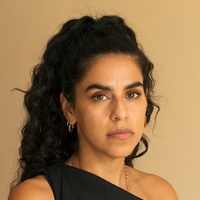
Samira Winter has been a defining presence in the indie music scene for over a decade, developing her bilingual, eclectic dream-pop project Winter while living in Los Angeles following her childhood in Brazil. Following the acclaimed 2022 album What Kind of Blue Are You? she moved to New York City and channeled two years of writing across tours, cities, and sublets into Adult Romantix, her Winspear debut and a love letter to her time in LA.
Conversation
On navigating the unknown parts of your process
Musician Samira Winter discusses facing imposter syndrome, looking back at your process, and learning how to ask yourself the right questions
As told to Emma Bowers, 1843 words.
Tags: Music, Process, Success, Focus, Family, Inspiration.
Do you have any creative rituals you’re practicing these days?
I’ve been working on a b-sides project. It’s been a bit different than trying to write an album. I want this project to be a continuation of the album, but I also do believe that if you’re going to put something out, it shouldn’t be repeating something you’ve done. So it’s this balance between staying true to the world from my last record, but also bringing in something new.
When it comes to creative rituals, it’s a huge part of my life as an artist. Especially when I get back from tour, I’m always trying to get back into those practices because I think it’s important to find a way to show up in your life as an artist every day, if possible. For me, I even just be the practice of waking up, journaling, and then improvising a little bit to these new tracks I’m writing to see if anything from the subconscious comes through.
What showing up for yourself as an artist mean to you?
It’s basically the commitment to follow through if something makes a spark for you creatively. It doesn’t matter what you’re doing, it could be at the supermarket—you’ve got to commit to getting it down in some way. A friend who is a director recently told me that he always carries a notebook, so I grabbed a small one to always have in my purse. I’m also the type that’s always on my voice memos, too.
I also think it’s about being present in the world and noticing things around you. There’s so many little gems in day-to-day life. Overhearing conversations between other people, or you see something that creates that spark in you.
This makes me think about what it means to take your ideas and those sparks of inspiration seriously, instead of seeing them as passing whims. Can you talk about how you were able to cultivate that?
For some reason I really struggle with imposter syndrome. I think it may have come from growing up around musicians and feeling like I wasn’t as good as others. It’s funny, it’s so scary to even say that aloud, but there is that side of me that I’m always battling.
It comes up sometimes when I’m writing, a voice that’s saying “Is this good?” so it’s been a journey to show up no matter what and not let those voices stop me. It’s been a journey to get to the point where I’m actually believing in myself and my ideas, and to this day I still struggle with it a little bit. I had the dream to be an artist early on in life, and so I think because it’s been such a long term dream, sort of an obsession even, it’s also driven me to feel I need to do my best. That’s what really keeps me going. So now, instead of asking “Is this good?” I try to ask different questions, like “Does this feel good?” That’s where my intuition is a really helpful guide.
Do you have any early creative memories that stick out to you?
I remember writing my first song when I was 12. I had tried guitar in music class, and I had really liked it. For my birthday that year, my dad got me an acoustic guitar, a classical nylon string one, very Brazilian. I really remember as I was learning songs, thinking, “I want to write a song.” I remember learning E minor and it struck me. I felt like I was chasing a cool, sort of bittersweet sound, something a little bit angsty. Those first chord progressions really got me curious and interested to play with melody.
To this day I love to journal, and I felt like my first song was just like that: a diary entry of an emotion that I had. I think that actually set the tone for how I approach making art now, coming from a place of connection to a feeling, even those that maybe in our day-to-day we have a hard time connecting with. I’m always trying to find a way to express that pure emotion, to swim in it and see what the story is.
You grew up in a bilingual family in Brazil, did you feel like there were any lessons about creativity that were unique to the culture where you grew up?
I definitely don’t want this to sound cheesy, but there’s a lot of joy in Brazil. There’s so much excitement and chanting and dancing and singing. There’s this kind of natural ease of expression that I witnessed growing up, and also just incredible musicianship and great performers—people that really feel it.
Growing up there I got to absorb so much and develop such a rich musical language, on a melodic and instrumental level, and with performance. As a kid I was also a dancer, and so I’ve always been excited by the potential of exploring music and being a performer and being on stage. That has always given me such a thrill, along with songwriting.
I think musically there is definitely a big influence. I would go to these shows with my mom when I was a teenager, and I got to see some legendary Brazilian artists perform. I got to see Rita Lee from Os Mutantes, and she actually sat on my lap at the theater. We always joked that it was a good omen.
There’s kind of a repertoire in Brazil of songs that everyone knows, and the masses can all sing along. As I was learning indie rock songs as a teenager, I was also immersed in Brazilian music, which I think also provided a rich landscape for melodies, and style when it comes to singing. That cultural element definitely affected who I am as a person, and helps me to approach art in a really multi-sensory way.
What is a part of being a working musician that you didn’t anticipate?
Definitely the business side. The accounting, the admin. When I started, I didn’t realize how important the other creative aspects are, too. When you make an album, it’s not just about the music. It’s also all the other art that you make to support and promote it. The album cover changes people’s perception and experience of the music, how it’s presented, the name, the videos, the aesthetics. Even the story of the album and how you talk about it. It’s not just about the music, for better or for worse.
You’re able to build multi-sensory worlds around your albums through visuals and videos, unique merch, and your set-up on stage. What’s that process like for you?
It’s hard thing to really pinpoint. I’d say with my last record Adult Romantix, there were a lot of underlying stories and things that were happening in my life, and then there were the things I was reading and feeling inspired by, like movies and books. I knew that was all the undercurrent, but it was only after the album was mixed that I sat down and wrote an essay about it to try and break down motifs and themes from the album.
And so, in that case, after the music was done, I was like, okay, what is the through-line? I do think that sometimes you have to first make something fully before you’re able to connect the dots conceptually.
It’s interesting, thinking about an artist and their work, and wondering if we can ever truly understand what we’ve made. It’s something I grapple with. But I think like anything in life, there are things that we understand, as they’re happening, and there’s things that we don’t. Every day we live with mystery.
When you’re making art, there is always a part that’s mysterious. Even in the final stages you’re dancing with the unknown during the creative process, sometimes a little bit blindfolded. You’re like, “Is this the right direction?” But you really do just have to trust the process and do what feels right, and eventually you’ll be able to understand it better.
I’m so inspired by the fact that you wanted to write an essay about Adult Romantix and narrow in on the themes and motifs—I think it speaks to the power of self-reflection and self-inquiry in art. I think that helps to create a sense of richness and cohesion that does a real service to your music and the project as a whole.
If we’re thinking about self-study and art as a reflection of our internal world, I wonder, now that you’ve been a working musician for many, many years now, has the process of making music changed the way that you view the present moment and by extension how you write? Is there some kind of nostalgic, curatorial sensibility that you’re living with in your day to day life?
My grandfather, who was Arabic and Brazilian, was a poet and he was very melancholic. I think maybe it’s a little bit of a genetic thing, when it comes to my sense of nostalgia, or maybe just a part of my personality. I think each of us has a question that’s driving us in our life, and it could be related to a self-inquiry of wanting to know ourselves or to know what we are capable of.
I started Winter when I was 22, and now I’m 34. It’s been this interesting thing that I’ve created for my life, a kind of an extension of how I experience the world. I think the premise of Winter itself involves nostalgia and dreaminess. The dream world is very inspiring to me and daydreaming is inspiring to me, the ethereal.
I’m the type of creative that believes that I’m a vehicle for ideas from the collective subconscious. And so in a way, I am the filter. Winter is the filter. I think it’s an interesting thing to live with this creative entity that’s a part of you and an extension of you. It’s like there’s this dreamy lens that’s my Winter lens that all of my experiences are getting filtered through, and turning into different ideas. It ebbs and flows, but when I was making Adult Romantix I wasn’t in a relationship, and so in a way I kind of had a romance with the making of the album. I was able to just put a lot of energy towards it, and a lot of love.
I love that your art was your love affair.
It really was. I think it still is. This little last period is an interesting phase because it’s the culmination. It’s like closing the chapter.
Samira Winter recommends:
Elis & Tom (2022), a documentary about one of the most iconic Brazilian records
Going to local shows
Elliot Smith Gives A Songwriting Lesson Video
Passion fruit everything
Films by director Gregg Araki
- Name
- Samira Winter
- Vocation
- Musician
Some Things
Pagination