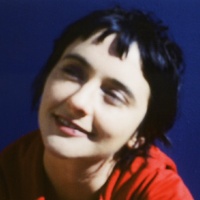
On learning to value your experience
Prelude
Miriam Shor was recently nominated for an Emmy for her portrayal of Helen in AppleTV’s hit television show Pluribus. Other TV credits include Younger, Before, And Just Like That…, Mrs. America, The Americans, and High Maintenance. Films include Magic Hour, American Fiction, Maestro, Guardians of the Galaxy 3, and Hedwig and the Angry Inch, in which she reprised the role of Yitzhak, a role she created in the original Off-Broadway stage production. Other theatre credits include Sweat (The Public Theater), Merrily We Roll Along (The Kennedy Center), Almost, Maine (Daryl Roth Theater), Scarcity (Atlantic Theater Company) among many others. Her work as a director can be seen on Younger and more recently as co-director on the Feature Documentary My NDA which had its festival premiere this year at South by Southwest Film Festival. Since then My NDA has been part of numerous festivals and had its international premiere at the Edinburgh International Film Festival. Miriam is a proud union member of Actors’ Equity Association, SAG-AFTRA and the DGA.
Conversation
On learning to value your experience
Actress Miriam Shor discusses the nature of luck, interrogating your agency and celebrating your collaborators
As told to Giuliana Mayo, 2856 words.
Tags: Acting, Collaboration, Success, Beginnings, Focus.
You’ve been in the acting game for going on 30 years, which is no small feat. And looking at your IMDb page, you’ve been in everything and played so many different kinds of people. Can you talk about how you’ve maintained that longevity in a business that certainly isn’t kind to women, especially as you get older?
Yeah, luck. Because I know too many amazingly talented humans who should be in everything, who are in nothing. And you know, you have to meet the moment, hopefully when you get the opportunity. But the opportunity itself to me is luck. And so you just step in it, and you’re like, “Oh shit, okay, I better own it and figure it out.” I didn’t have that understanding as much when I was younger, and as I was getting these opportunities. I was like, “Oh, this must be how it is.” So, you know, with all those years comes the wisdom like, “No, that’s not how it is.” That comes from seeing people that I came up with who are brilliant not get to show their brilliance, which is upsetting still, and I mourn that because we all lose out for not getting to see their brilliance and not getting to see them get out there. So, mostly it’s luck and, you know, hard work, but I thank you for saying you see lots of different kinds of roles, because I feel like that’s the goal.
That’s something I was curious about. Are you pursuing roles because they’re so different, or is that what’s coming to you? How does that work?
Well, first of all, I don’t think there are roles like Yitzhak [Shor’s character in Hedwig and the Angry Inch] to play over and over again. Which is good, right? To have your first big thing that people notice be this really unique thing, because then they don’t know how to categorize you. But they will anyway. It’s what we do. We try to compartmentalize and categorize, sort of organize the world because it’s such chaos. So I get it, but they really want to slot you as an actress, shoehorn you into a thing. And I kind of delight in the fact that I’ve been able to avoid that in some ways.
It’s always fun to me when someone assumes I’m like [a character] because of one of the roles I’ve played, and they don’t know one of the other roles. If you watch Diana Trout [Shor’s character on Younger] and Yitzhak, these are two different humans in the world who really attack things differently. I dealt with them differently as an actor so I love that you would be hard pressed to try to figure out exactly what I can do. And it is fun to get to see how much of myself I can put into a character that is very different from myself. Also, there’s so much freedom when you’re playing someone else.
Talk about that.
If it’s not you—because I’m actually a pretty private person—but if you have this beautiful character that’s written, you can put all kinds of things into that, and see, especially if it’s someone who’s very different than myself, then I get to walk around in that, and inevitably, you take it home with you, and it influences you a little bit. I remember playing Joan of Arc, and I was feeling really persecuted for many months. And I was like, “Wow, I’m really having a lot of anxiety.” It’s like, “Well, you’re being burned at the stake eight times a week, so that might mess with your brain a little.” So, you know, there’s good and bad. It’s so freeing. You’re safe in the confines of the character to really go everywhere, and that’s fun. But I don’t tend to live as the character 24/7.
You’re no Jeremy Strong.
Yeah. Mostly because I have to be present for other people in my life, my children, my husband, my friends, and I think I like the challenge of the craft, going back into it. There are times when you need to stay in there a little bit because it helps, but I think that’s the fun part is kind of slipping in and out of it. I think other people get off on the whole being in it. And I get it, if that’s the fun for them, then that’s the fun they should do. As long as they don’t mess with everyone else’s process, then I become exhausted.
That’s fair.
Everyone has a job to do on a set or when you’re on stage. Everyone has a job to do. Your job isn’t more important.
You recently went on a wild Emmy ride because of your nomination for Pluribus. I wonder how it feels to work for so long and finally be acknowledged on this large stage.
I was actually ruminating on it. I was like, “This is an interesting moment. Let me sit in it and think about it and pick it apart and write a fucking thesis about it,” because that’s what I do. I decided I wanted to be an actor and thought I’m going to go to college to study acting, and I didn’t get into any of the programs that I applied to. And then I tried again, and I still didn’t get in. Everyone was like, “No, thank you.” And then I did it anyway. I was like, “Well, okay, I guess they don’t really want me, so I guess I’m free to now think about what it is I want because it can’t be dictated by what they want if they don’t want me.”
That was very freeing because then you’re like, “Oh, okay, well, what’s the experience that I want to have based on what I can have, which is just what’s in front of me, not their approval, because they’ve said no thanks?” So that starts the ball rolling there, then rejection just becomes this thing that’s of course going to be there, but it’s not the defining thing.
Right.
And that’s the thing about collaborating. It wasn’t a solo show that they were like “Miriam Shor’s solo show’s getting all the accolades!” I was part of something that I thought was amazing that many many people came together to create. And I was really proud of the small part I played in it, and I was really proud of the entirety of it. I was thrilled by getting to be in it and that it existed even at all in the world because I would have been a huge fan of it anyway. So I’ve had an amazing time giggling about it and being giddy and feeling proud of it because it was a collaborative piece and that to me is helpful and yeah I worked hard and I hope I did a good job and hearing that people thought I did a good job is great. I’m also mindful that it’s fleeting, and in, you know, fifteen more seconds, people will be like, “Miriam who?” So finding the fun and the joy of it, that’s what I’m going to take with me. Not like, “I’m deserving of this, and so therefore, when it doesn’t happen, I’m not deserving of it,” that’ll fuck you up.
When you were on Younger, you started directing, was that an extension of your collaborative process?
There were so many things that went into that… playing a character like Diana Trout, who’s so secure in her value that she gives to the situation. You know, her insecurities were many—she was wearing literal armor sometimes with her fucking jewelry, so she clearly was vulnerable under there. But her belief in her ability at work was so unequivocal. That was fun to play, and so I learned things from it. I was like, “Why don’t I walk through the world like that?”She’s kind of a total dick to people. I don’t walk through the world like that because I think people deserve to be treated well. But there were things about her, that kind of confidence, that I was like, “Oh, that’s interesting,” and so that actually unlocked something for me.
I started to have friends who were actors who started directing, and I thought, “Why do they feel that kind of agency?” They were mostly male. That was really very telling. I was like, “Do I not have agency in this moment because I really don’t think I can do it, or because I don’t think I should? Like, what is the reason?” And then I had friends who were also directing and producing who were like, “Why do you devalue your 30 years of experience?”
That’s such a good point.
I was like, “You’re right.” I do have a lot of experience, and it’s not less valuable than the experience a first AD would have or a writer would have, who also often get to direct.
You also just directed your first documentary, My NDA, in your 50s. Can you talk about where the confidence to do this thing you’d never done came from?
I didn’t have confidence. I just was like, “I really feel like someone should do this,” and no one was doing it. The belief that it needed to be done was stronger than the belief that I shouldn’t be the one to do it. And ultimately, I was like, “Well, it’s not going to happen if I don’t do it, and that’s not tolerable to me.” But the main thing was that I was just gathering people who did know what they were doing.
So I got a co-director, Julie Dressner. I’d seen her film, Personal Statement, which was about college admissions for students in underserved communities. That’s an interesting subject, but how do you get at it? She found a way that was really personal, and I was like, “Ooh, I feel like that’s the way into this, not like a sit down interview, but really from the human point of view.” It took six years.
I always say it’s like you think you’re climbing a mountain, and then you get to the top of the mountain, and realize it’s actually an entire mountain range you’re climbing. There’s no end in sight, and that is exhausting and terrifying and upsetting and like its own journey. And because it’s not a story you made up, because you’ve got participants whose stories are gut wrenching and need to be told—especially this subject matter because they’re being silenced—they really need to be told. You now have linked your creative journey to that, and that’s so much more important than any bullshit you’re going through, that you know you don’t have the option to give up because then you’re giving up on them.
I want to know more about that because you’re involved in such a narrative world with acting, and then you decide your first big directing project is going to be a non-narrative piece.
Stories inform us. True stories, stories we make up. They’re important to varying degrees for varying reasons. But certainly, if you want to change things, they’re important. And I think NDAs stopping people from talking about things that can harm us, that has to change. I equivocate about a lot of things, so when I think something is unequivocal, I listen to it. And to me, the fact that we can have a contract that stops people from speaking about their own lives, so we can’t know about harms to individuals and societal harms, is just a no-brainer. That’s wrong. We need to fix that. And so, you know, I kind of was like, “Well, I have to listen to that voice because it won’t fucking shut up.” I don’t really have a choice at that point. And then the narrative side of my brain is like, “It’s also a really good story.”
So in this process of making a documentary for the first time, what’s the most surprising thing that you learned over the six years?
I mean, any person who makes a documentary will be like, “Yeah, no duh” when I say this. But I was pretty naive, right? I was like, “Okay, you film it, and then whatever happens in front of our camera is the story, and that’s a documentary is filming, filming, filming, filming.” Well, a verité documentary, where you’re just filming and filming what’s unfolding, you’ve got hundreds of hours of footage, so you shoot first and then you write. Whereas in a narrative production, you write first, and then you shoot. And so in the process of crafting the story, the documentary, yes, you have all this truth in front of you, but you have to hone it. You have this marble block, and you have to make the statue. What do you take away? What do you keep? It is so painful. I didn’t realize how painful it was going to be.
Killing your darlings.
Yeah, that’s it. You have to still get to the truth of why you’re making it, and you’re taking things away that just are painful, but it’s necessary. And that’s where the collaboration is really helpful, because me and Julie and my editor Jen Finneran, who’s fucking brilliant, and is credited as a writer because editors are writers.
Fully agree, I think editors have wizard brains. They see how to put everything together in a way that my brain doesn’t always comprehend.
Right? I didn’t realize that some people who are editors, on documentaries in particular, but even on narrative, get handed the footage, and then the director will say, “I kind of want this to happen,” or “I’m thinking this, bye.” And the editor has to spend hours and hours and hours cutting by themselves. I was like, “Are you telling me a director’s not sitting with you, working it out with you—and then you don’t get writing credit?!” That blew my mind. That’s awful and wrong. But sitting in a room with Jen and Julie arguing about things and making your case and finding the thing that comes up through that process that has to stay in, that was really hard. And I loved that. I was like, “Oh, this is how we’re going to get to it…”
But how amazing to have that experience and to learn something so valuable and new. I have such an appreciation for people who go out and try to tell stories that can help. And the fortitude of people who don’t stop. God, it’s so exhausting. And there are some people I came across in this process, who just just keep going. I still don’t know how they do it.
Miriam Shor recommends:
Theater: Pre-Existing Condition by Marin Ireland. I saw this play last year starring Maria Dizzia (also the director) and am excited to see it back off-Broadway. Marin gets at something with her play that is so tricky and complex–our relationship to women and violence–and she does it with such humanity, humor, empathy and intelligence. Feels like a magic trick. Multiple actresses will be stepping into the lead role so I will definitely be seeing it several more times.
Chocolate: Confectionery! vegan chocolate store in NYC. I had no idea it was vegan for the entire first year I frequented it. Delicious chocolates- cookies and cakes too. Pretty sure it’s run by real witches. Nuff said.
Bookstores: Especially used bookstores—that smell! The older and mustier the better. But I’ll take a brand new one too. As long as I’m surrounded by books. I always feel euphoric/despondent- so many books! I’ll never read them all! Could spend my whole day (life?) in a bookstore.
Brand New Bookstore: The Rabbit in NYC, a lively, local independent bookstore. Added bonus, serves booze and snacks.
Used Bookstore: The Abbey Bookshop in Paris, an independent used bookstore where the shelves are so crammed with books you run the risk of accidental burial–heaven.
Books: The Ballad of Speedball Baby, a Memoir by Photographer/writer/bass player of hardcore NYC band Speedball Baby, Ali Smith. There are so many depictions of NYC in the 90s that feel like some absurdly wealthy man’s fetishized, whitewashed Hollywood version of NYC in the 90s. This brilliant book is a fucking authentic breath of fresh air that brings all of the grasping, unique, messiness of that era to life.
Windows: There’s something really mesmerizing about a framed visual portal to the real world. I love people watching, staring at the sky, daydreaming. I’ve seen some truly incredible, bizarre, hilarious, beautiful things out my NYC apartment window. With all these artificial screens shoved in front of our faces I have to say—I’m a big fan of taking a break and just staring out an actual window…ok but that said I still love a brilliant TV show or movie.
- Name
- Miriam Shor
- Vocation
- actor, director
Some Things
Pagination