On the power of restraint
Prelude
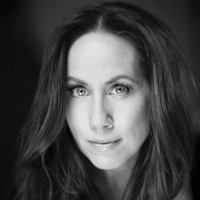
Julia Laws is a Los Angeles-based musician, songwriter, and producer who performs and records as Ronboy. She grew up on Fidalgo Island off the coast of Washington state and emerged from the DIY music scene before moving to Los Angeles, where she worked at the Kia Forum while developing her own music. She has since recorded and toured with Matt Berninger of The National, performed with artists including Jade Bird, Linda Perry, and IDLES, and organizes the annual benefit Ronboy’s Rockin’ Disco.
Conversation
On the power of restraint
Musician Juilia Laws (Ronboy) discusses how she approaches songwriting, managing different creative responsibilities, and valuing limitations.
Do you write on tour?
I don’t write music on tour, but I’m constantly texting myself words and lyrics and whatnot. Even just having a conversation and someone will say something I find interesting or a joke or anything that sparks my mind, I’ll text myself or I have a book that I write it down in. When I’m in a space where I can write and I’m trying to put something together, I’m often scrolling through and seeing if anything fits.
What is the process after you text yourself? Do you put it on paper next? Do you put it on a laptop next?
I avoid my laptop and phone as much as possible. Most of the time I’m going to write the music first. Maybe there’s a lyric that’s already in my head or a melody or something. But a lot of the time, I’ll either loop sections of the music or just loop the whole thing and stream-of-consciousness blurt things out, or I’ll be staring at my phone or writing it down. Then once something feels like it sticks, I write that on paper.
Do you identify more as a writer or a musician—or both?
Definitely both. They go so hand in hand with what I do, especially when I write on bass instead of keys. Keys was my first instrument. I always loved it. But there’s a dance between bass and vocals that I enjoy bringing into my music. I was in choir as a kid, and I was an alto. So, always the harmonizer, always the support person.
It’s been exciting for me to bring that in instrumentally to my music. Instead of just thinking the chords changing from one, five, two, three—thinking what the bass is doing and how it’s playing with the voice and how they complement each other.
Do you write quickly?
I actually just spent the weekend and most of this week recording new Ronboy. We went to a couple different studios. The first studio was a live room, all of us in the room together recording. And then we moved to another studio and did some overdubs.
I put out my EP Get Rich about a month and a half ago. I got off tour and had a couple weeks where I had some downtime and was ready to write more music. And then it worked out perfectly to get in the studio right away.
It’s exciting when you get to do that because sometimes it takes years from writing a song to recording it to putting it out. Even just writing to recording can take two to three years. So, writing three of the songs of the five, and then a week and a half later getting to record them, is so refreshing.
Do these new songs start with bass or are bass-forward, or have you jumped around a little bit?
They all started being written on bass. Some of them went a little more synthetic. And some of them went so organic that it’s simple and just bass, drums, vocals, guitar, nothing else added. And it’s exciting because you can find the different energies there. Sterling, who drums on all of my music, is the most incredible drummer I have ever seen. And I’m unbiased, totally unbiased about that. Having him on a live drum kit and then moving to a LinnDrum or Vermona or Elektron—we were using all of those—he’s so smart and creative with blending the two together. Sections will be all synthetic and then move to organic and then blend.
I like limitations. I have been trying, both writing music and recording, to keep it simple, stupid. I love a wall of sound and that will be the death of me. I’ve been really fighting that, and it’s been liberating to simplify.
Your songwriting is very economical. Your lyrics feel stripped down. Is that the natural way you write? Or do you edit like crazy?
I’m a pretty severe empath. And it’s easy for me to put my story on things where the information isn’t there. Whether subconscious or not, I think that comes into my songwriting.
I can tell you what each song is about. And a lot of it is very personal. But I think there’s something open-ended I like to try and portray to leave room for people to put their own self in it.
A lot of my choruses often aren’t really wordy. They’re a phrase repeated. And sometimes that can be me trying to convince myself that’s the truth.
I love how you take a simple phrase like “I’m only playing” or “I’m a disaster” and repeat it until it means something different. You’re able to portray a lot of emotion with just a few words.
It lends itself to me writing the music first. Naturally there’s things happening in my life or on my mind or I’ve seen or I’m experiencing that are going to play into what I’m writing a song about. But I often am like, whatever this song is telling me it’s about. I don’t even mean that in a woo-woo way. I’m just like, the song sounds angry. Let’s look through the notes.
I feel like you show restraint with your lyrics and transform them into something more abstract. How do you decide how much of yourself to reveal?
Good, because there’s a few people that shouldn’t know certain things.
As a creative nonfiction writer, sometimes when you publish something, you’re going to hurt someone closer to you for the greater good of the art. That’s mostly why I write fiction.
Yeah, but who’s to say that what I’m writing isn’t fiction? Or nonfiction.
There are times where you have to be completely honest and there’s no reason to sugarcoat or try and protect feelings because it’s important to be honest. And then I think there’s other times that you can change a word and let the blow be a little more universal than something specific.
I’m usually not talking from my perspective in songs. Sometimes I’m talking about what I think people’s perception of me is. Sometimes it’s my perception of me. Even though I’m using I, me, you, they, whatever, the actual narrator is shifting for me. You can take it how you want it. I very rarely have the same narrator the whole song.
There’s a lot of tension in your music. Is that intentional? How do you create that?
It is intentional. On a song like “I Am Only Playing,” for instance, you mentioned it seems like the more you say it, the more the perspective shifts. And that is exactly what I wanted. I leave a lot of my chord structures open. To be simply technical, I leave out the third a lot of times, so you might not know if it’s major or minor, but the vocals will inform whether it is or not, and sometimes it changes. That happens in “Retriever.”
It’s repeating three chords over and over and over again, and the vocals kind of take you on the journey of whether or not it gets a little happier, goes darker. I love playing with that because there’s so many options in how you can force that. Another way to build tension is syncopation. You can do things with the drums and it sort of builds like, oh, I know something’s coming.
I am unfortunately a devil’s advocate in my life to a high fault. Everything is a gray area. I’m sure my therapist thinks, “Just pick a damn side,” and I’m like, “I simply could never do that.” I really do try to open up perspective on both sides and try and understand where I’m coming from, where other people are coming from.
Do you like switching between supporting musicians and being a frontwoman?
Absolutely, yes. For the last year and a half, I had the opportunity to support Matt Berninger from The National on tour as Ronboy. I opened the shows and then I was also in his band. The first couple of shows that we did, I was like, “Oh, I’m in for something. I’m so out of shape.” You have to build up that stamina.
For something like what I just did with Matt, I’m working for nine hours straight. Then I go out to the merch table. There’s no choice but to be in shape for it. And the adrenaline also carries easier. I tell you what, I sleep really well on the road.
And, it was really the most rewarding experience. It was so fun. The camaraderie between both things, it’s definitely a mind game sometimes. Not in a negative way. You get off stage and you just put your heart and soul into something and it’s the best feeling. And then you’re like, “Okay, take a sip of water.” Maybe you change a piece of clothing. You’re dripping sweat. Wipe off, redo a couple things, make sure you’re not a puddle. And then you get to go out and do it all over again.
But it’s a different mindset, for sure. I don’t know if that situation would ever happen with another artist, but there’s a freedom to it. When I’m performing in Ronboy, I’m so terrible at banter, I’m thinking about that. I’m like, “Oh shit, I have to talk, too.” Talking is hard. So, I just started talking about what I ate that day. No one needs to know about what kind of soup I ate. They don’t care.
It’s interesting because the people who saw the opener almost might look at you in a different way. A lot of supporting musicians have their own projects, but not many audiences get to see them shift in the same night.
Oh yeah, absolutely. And it’s also a testament to Matt and to Matt’s fans as to how welcoming everyone was. Matt sang a song on my EP and so he would come out during my set. Having the headliner come out during the support set is so wildly cool and generous of him.
And then I’m featured on one of the songs on his record. I’ve been fortunate to play and sing on his last couple of solo records. So, it’s like this family affair that people are like, we just saw you and now I’m seeing you. And then I just saw you and now I’m seeing you. That was a really special experience that I’ll always hold very dearly. But playing as a hired person in a band or for an artist, it helps balance my perspective, too.
You seem really comfortable on stage. Did that come naturally?
That’s the feeling we’re chasing for sure. I had stage fright for such a long time. And sometimes there’s a good 10 or 15 minutes before a show that I’m just sweating and nervous and your whole body is buzzing. Then the second you walk out, it’s just like, okay, yeah, here we go.
I think it’s more anticipation. I’m a physically anxious person. Don’t get me wrong, I definitely do get stage fright sometimes. But it used to be a lot worse. And you could hear it in my voice the first couple of songs. Anytime I would hear those back, I would get so frustrated because I was like, no, I know. That’s not how I sing that at home. That’s not how I sang that in rehearsal. I don’t really know how—I really just shook myself and looked in the mirror and was like, get over it. Because this isn’t how you want to portray yourself.
What jobs did you have before doing music full time?
I worked in restaurants for a long time. I was a bartender. I worked at a venue in Los Angeles for about eight years, the Forum, now the Kia Forum, which was an incredible experience.
What did you do there?
I did VIP services and some artist relations. You’re working the coolest shows ever and getting to meet so many people. That taught me a lot. I’m grateful for that time at the Forum now, because it really taught me a lot about what it takes to put a show on… the person power needed to make it all happen.
It didn’t teach me anything creative. It didn’t make me a better musician or teach me how to not have stage fright, but it really taught me the value of every single person involved and how important it is to have good people around you and how you want to be portrayed as an artist. Who’s on your team, who’s speaking on behalf of you. That was huge.
What would your advice be to musicians who are trying to make money being a musician?
My advice would be to not put yourself in a corner as to the way to make money. I think it looks really, really different and there’s a lot of different opportunities. Not one hundred percent of my money comes from music either. The advice is just to throw everything at the wall. If you have an interest, if you have an idea, absolutely go after it. There are definitely new ways to make money in music. And some of the old ways don’t work anymore.
Why did you call your EP Get Rich?
I wrote “Get Rich Fix.” The line in that song is “get rich, get sick, have a baby, fix it.” And I thought it was sort of a kind way to say, like, go fuck yourself. That’s the honest answer. The toned-down answer is, for me, I feel like we’re so quick to try and solve everything with something that’s not going to solve anything. How many times have you chatted with someone? You’re like, “Oh, I’m sad about something.” And they’re like, “Just don’t think about it.” And you’re like, “Oh, I’m fucking broke and I can’t feed my family.” It’s like, “Well, just get rich.” It’s a cheeky, wouldn’t that be nice?
What does “getting rich” mean to you?
I grew up in a really small-town community. Lovely, lovely, lovely place. But I’m grateful for the perspective of being able to travel and move around, and especially being raised and socialized as a woman. You’re just like, okay, well, you’re going to graduate from school. Maybe you’re not going to go to college because you could just get married and have a kid. And that also, for the record, is wonderful. What a great life.
Not everyone wants that life. And that wasn’t what I wanted. It’s just like a call against the societal: you have to do this now. Now you have to do this. We’re band-aiding shit constantly. And get rich is, in essence, Band-Aid. Just Band-Aid it. Don’t actually fix it. And also, get rich. That would be sick. But then fucking give it all away and don’t be an asshole hoarding it all.
What puts you in the mood to write? Do you wait for the feeling? Are you always ready?
I’m not always ready. I’m not a runner and bless you if you are. Runners always talk to me about the runner’s high thing where there’s a one-to-three-mile period that’s just absolutely hell, and then you break through and you’re cruising. I relate to that.
I really have to self-isolate. But, for instance, I just got off the road on tour and had two weeks that I knew was fairly open schedule-wise, and so I just decided to not see friends, not be social. Partner’s out of town. I’m gonna do something active in the morning and just lock myself in my studio and write and try and come up with stuff.
And it’s miserable for the first one to three miles, and then something you’ve been banging your head on finally breaks and the song opens up, and then all of a sudden, you’re just like, this is what I’ve been looking for. But I really have to sit. I think boredom breeds creativity. It’s so easy for me to distract with phones, with shows, with friends.
Really being conscious of, if I get stuck on something, to not just be like, okay, well, let me scroll the news or social or something. I’m like, no, I’m gonna go on a walk or I’m gonna sit and be angry until I break through.
I think our phones are incredible in a lot of ways. You can share creativity on them, but they suck creativity out of you. But you have to be on your phone these days in order to share your music.
For me, that’s why I start with pen and paper.
You have to allow the time. We’re all so impatient. There are endless ways to get instant gratification. I believe there’s so much value in waiting for something. I don’t even mean earning something in the sense of, like, you earn a song, but you kind of do.
I’m not using ChatGPT or AI to write a prompt. I don’t want anything to make the start for me. I want to make the start. I want to see it through. I’m responsible for it. Good things take the time that they need to take.
I teach creative writing to adults, and I tell my students that writing is really the process of discovering what you’re trying to say.
That’s the process. You don’t learn anything about yourself, about writing, or whatever it is you’re doing if you’re not doing it yourself. The gratification of being so stuck on something and finally breaking through and feeling proud of that, and feeling like that’s something you want to share outside of yourself, is so worthwhile. Everyone should be able to experience that, whether they’re in music or in numbers.
If you’re trying to come up with a cocktail program at a brand-new bar, with the joy of being a chemist, let yourself be the chemist instead of AI telling you, “Well, I think peanut butter goes with the XYZ.”
“It’s a fine tool…” No, fuck AI.
Julia Laws (Ronboy) Recommends:
Quiet by Susan Cain
Resynator documentary
Playing tennis
The Bald and the Beautiful with Trixie & Katya podcast (highly recommend watching their eps)
Ronboy’s Rockin’ Disco benefit for Alexandria House
my magic 8 ball
- Name
- Julia Laws
- Vocation
- musician (Ronboy)
Some Things
Pagination