On the role of perception in the creative process
Prelude
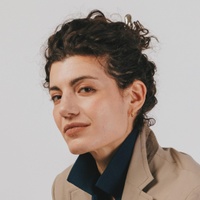
Isabel Castro is a five-time Emmy-nominated Mexican-American filmmaker and photographer. Her latest documentary, Selena y Los Dinos, had its world premiere at the Sundance Film Festival 2025. It won a Special Jury Award for archival storytelling in the Documentary Competition, multiple audience awards, and premiered on Netflix. Her first feature film, Mija (Sundance Film Festival 2022), was a New York Times critics’ pick, won a Cinema Eye Award, and won the Grand Jury Prize at the Champs-Élysées Film Festival. She directed, produced, and filmed the Emmy-nominated, award-winning documentary short USA v Scott (Tribeca 2020, The New Yorker), Emmy-nominated Darlin (Tribeca 2019, NYT OpDocs), GLAAD award-winning Crossing Over (Univision/Participant Media), and the Emmy®-nominated Netflix docu-series Pandemic. Castro was named one of Filmmaker Magazine’s “25 New Faces of Independent Film’’ and DOC NYC’s “40 Under 40,” and she was nominated for an Independent Spirit Award. She is developing her first scripted feature with The Department of Motion Pictures and working on Untitled Los Angeles, a photography and film project.
Conversation
On the role of perception in the creative process
Filmmaker, photojournalist, and photographer Isabel Castro discusses the importance of evolving as a storyteller, why risk is required, and balancing objectivity.
As told to Miriam Garcia, 2903 words.
Tags: Journalism, Photography, Film, Day jobs, Money, Independence.
Your background spans from photojournalism to documentary, and you often write, shoot, and direct your own work. How has working across so many media shaped you as a storyteller?
I think of myself as a curious storyteller before any other kind of label. I loved painting and drawing when I was younger, and as I neared college, I thought photojournalism would be a practical application of my desire to do visual storytelling. It was in college that I found a story I thought would be better told through film, and I started my first documentary.
Every story has a medium that’s best suited to tell it. For over a decade, I’ve been honing my documentary skills—getting stronger in production and collaborating with editors and producers—whereas photography, writing, and painting are more solitary pursuits. Practicing each of these media has made me stronger as a storyteller overall and inadvertently taught me a lot about the others.
You are Mexican-American, and while you were growing up, your family moved to Argentina, Brazil, and ended up in Connecticut. You have mentioned that assimilation in high school was challenging because there was a tension between fitting in and embracing your heritage. How does this tension impact your creative work?
That shows up in my work and motivates what I do. I gravitate toward storytelling because it lets me explore the world, which fundamentally excites me, but it also lets me better understand myself. Growing up between all these cultures was confusing, and as I explored the world, I started holding onto the universal themes within those different cultural experiences. Throughout my twenties, I told stories by finding the most universal theme and then speaking to it through the specificity of each story. That both motivates and defines my work.
How do you find the stories worth telling? Does an idea arrive, and you chase it, or does something else spark it?
You can have rituals to facilitate finding good stories, but you have to practice patience. You don’t really know what will spark something in you. When I find a story I’m deeply invested in, it’s all-consuming. It consumes my mind, my heart, and my soul, and it’s not something I can force.
It’s different for every story, and it always shocks me how unpredictable it feels. I’m developing my first fiction film right now, which started by finding an image I became obsessed with in a photobook. My first film started from a topic I wanted to explore: families living with mixed immigration status. When I’m in a rut, I go to museums and listen to a ton of music. Sometimes it feels like luck—I find an image or a theme or a concept that gets under my skin, and the development starts outward from there.
For creative projects, particularly documentaries, there is friction between pushing yourself, doing something new, taking risks, and embracing something different, whether it is artistically, visually, in access, or with subjects. But there is also the need to mitigate potential risks, like protecting the protagonist. How do you balance the artistic challenges and your ambition for how you envision the final project with the possible obstacles that could come along the way?
That’s probably the single most challenging thing to navigate in documentary, and in a lot of documentary practices, whether it be in documentary film or in documentary photography or even in just nonfiction work generally, is that you’re telling stories about real people’s lives, and the risk of doing that is vast. I mean, it’s like there are so many different ways in which telling someone else’s story can affect their lives. It’s an ongoing process of both learning about the extent of what that means, but also, with every single project, that risk is different.
It’s something that can never be prescriptive. As I get more and more experienced, I understand the complexity and nuance of that risk more and more. For me, in my own work too, the biggest challenge is the risk of your own creative expression and your desire to share a story that really excites you, and navigating that alongside the implications of what that means and of sharing someone else’s story.
What a lot of storytellers are having to face in this current moment is also the risks that you take in your own career. As someone who feels a real compulsive desire to express myself, to understand the world, and to share my ongoing understanding of myself in the world, I sometimes can or cannot align with more commercial-based requirements. Balancing artistic self-expression with the need to make a living, survive, pay rent, and all of these things that we all have to do sometimes becomes really challenging to navigate creative risk and how that might affect your income stream, or also just the way that you’re perceived and your commercial value to a market.
Risk is just inherent to art, and it’s inherent to the artistic process, whether it be in terms of how it affects you or how it affects other people. And it’s a really big component of how you make decisions when making a profession out of being an artist.
You just mentioned something about also thinking about how you’re going to be perceived. Can you elaborate on that?
It’s something that I really struggle with. I’ve always consciously or subconsciously really valued process over product. To me, the process of making a film, whether that be the relationships I form with the people I’m documenting or whether it be the relationships I form with my collaborators, and the experience of curiosity and of learning and of exploration, that really excites me. It’s why I do what I do.
But living in Los Angeles can feel disorienting because you’re often measured by the product that comes out of all of that labor, out of all of those relationships, and out of all of that experience. And so oftentimes, you’re perceived or understood through or by the product that you make at the end of this creative process.
Being an artist can be confusing. You go into it because you value the process, and it’s a constant return to valuing the process, but you’re often having to navigate your work and sometimes even yourself as a product. As my career has evolved or progressed, I’m conscious of how I’m perceived and how my work is perceived, and sometimes it’s necessary also because it facilitates you being able to make more work. If you’re perceived or valued within a certain kind of context, then you are able to find additional funding or additional support for your next work. So, threading that needle between process and product is just an ongoing internal struggle.
In film, audiences are so used to having a resolution. We’re so used to first, second, and third acts, the hero, the villain. But an ending in documentaries can be so open-ended. There is no proper resolution, the case might not close, or the conflict in the community keeps happening. How do you approach ending a project?
A lot of my work is related to civil rights and immigration and things that are very divisive in the United States, and I try very hard to make work that does not feel dogmatic or pedantic, and that feels exploratory in its approach and feels like it trusts the viewers to form their own opinions around something.
That said, as a filmmaker, as an artist, as a storyteller, you’re constantly making choices that consciously or subconsciously signal your own bias or your own perspective. And this was something that I really struggled with in journalism. When I’m on a journalistic assignment, I try very hard to be “objective,” but your own lived experience is inextricably tied to how you see the world and how you report a story.
In terms of when I literally decide to stop telling a story, those decisions have always been ones that have been made for me. You usually reach a point at which those stakes are answered, and I’m speaking mostly about the vérité work that I do. Most recently, I did a short about my husband’s barber, who returned to Mexico after 38 years of living undocumented in the United States. And we just filmed him in the last week that he was in Los Angeles and then arriving in Mexico, and the central question within that story was: will he leave, and what will that experience look like for him? And so once he left, we landed in Mexico, and I stopped filming. We could have kept filming for a long time, but this was the central question that I wanted to explore within this project, and so I made a very deliberate choice to stop filming.
So sometimes the story dictates. Many more times, it’s imposed. There’s a deadline, there’s a festival submission, there’s a premiere deadline, and my team and I work as physically, mentally, and emotionally hard as we can to get the project to be as strong as it can be within that timeframe. Then you just have to step away.
Your documentary Selena y Los Dinos told a story audiences already knew well, and it was built almost entirely from archival footage the Quintanilla family provided—they even sought you out after Mija. When the material and the subject belong so closely to someone else, where does your POV as a director come in?
Selena y Los Dinos was the first time I’d ever worked that extensively with an archive. I completely, utterly, and wholly fell in love with the process of it because there’s something beautiful about working with material that was shot for a different context than the one that you’re using it in, and with that comes a massive amount of responsibility. In some ways, reappropriating the context of the use.
The first time I saw the material that we were going to be able to work with, I first and foremost felt really overwhelmed. I felt really daunted, but I felt really excited. I made a choice that I wanted the archive basically to be the biggest author of the story, and I wanted my editor and me to find the story within that archive.
The producer and I worked over the course of two years digitizing all of the material, and it was really important to me that I was a part of that process. I went down to Corpus over a dozen times and watched all of the material to really wrap my head around what that material looked and felt like. It was only after we did that whole process that we did the interviews with the family. So by the time that we sat down to do interviews with the family, we had already created basically a really long assembly of all of the archival material in chronological order. And Carolina, the editor, had already started to carve out the story that we were trying to tell within that.
There’s a misconception, including my own before going into making this process, that working on an archival film was just as artistic a labor as shooting my own film. And in my case, I shoot a lot of my films myself, holding the camera so it feels like a very direct and intimate storytelling experience, but this felt just as self-expressive because deciding what to keep in and keep out is a deeply personal decision.
I went into the process having a really strong relationship with Selena as a symbol, and over the course of those two years of digitizing the material and getting to know the family, I really got a sense of Selena as a person and as a young woman. I really wanted to convey that as much as possible through the film. The decisions that we made were most and foremost guided by the desire to have her grow up on screen and have her be understood as not just her personality and who she was, but also who she was to her family, who were the people that knew her the best.
Working with archival is deeply creative and a deeply artistic process. It’s almost as if you’re getting all the ingredients put on the table, and then you still have to cook the meal instead of going out and foraging for the ingredients yourself. The cooking process is still a deeply artistic and laborious process.
When a production company or subject brings you a project rather than you finding it, how do you know whether it’s yours to make? What makes you say no?
I have a few guiding principles. Firstly, I have wanted to work on projects where the participant isn’t self-financing it because I’ve felt that that’s just been important to me in my creative process. And so that’s been one thing I’ve tried to stick to as a general rule for myself. In this age of celebrity film, I really want to try to avoid hagiography just for hagiography’s sake. What was really exciting to me about Selena’s story is that it felt important for historical posterity for these materials to be shared. It was the first time the family had ever shared their personal archive, and it also felt like the right time to do it within the current political moment. It felt really important to make a film that celebrates the incredible achievements of this young Latina woman.
I love celebrity docs, and I’ve grown to love it more and more because I feel like it can be a Trojan horse for exploring themes that are both important to me and very interesting to unpack. So I choose projects, if a celebrity is attached, in which there’s a potential to do that. And I choose projects that I feel will not just satiate a desire to see content about a celebrity exclusively, but will be something that people and audiences can return to over time.
Within my own work, I’m trying really hard to make work that can stand the test of time, that isn’t something that is released on a streamer and does really well for a week, but is something that can be returned to, rewatched, and can be shared throughout multiple generations, but can also be experienced by an audience over the course of time.
That’s important to me because you can see the work change because the audience changes, and the society that’s watching it changes. My work’s relationship to an audience has always been important to me. So for that reason, I think about how my work can hopefully be revisited in the future. So I try to take on projects in which I feel like that can happen.
Was there something someone told you, or something you learned, that rerouted your trajectory?
I made my first documentary when I was in college and sold it and had beginner’s luck, so to speak. But despite that, I learned how unbelievably hard it is to be an independent filmmaker if you don’t have independent wealth or independent support that enables you to take on these big risks. You’re taking on huge gambles on yourself and on your work, and that can be really financially and emotionally taxing.
And so after making Mija, I decided to get a job at Vice and learn how to make work that was more commercial. After leaving Vice, I started freelancing a lot for projects that were going on streaming platforms, and there were often shoot-bibles and ways in which the streamer or production company was telling you to tell a story. And I loved those experiences, and I learned and developed a lot of community through them, but it didn’t scratch an itch that is unfortunately ingrained within me.
And I say unfortunately, because sometimes I wish it weren’t. That itch is just an itch to express myself and to explore and to tell stories in ways that are visually exciting and different and to take risks and to make work that feels unexpected. To me, it feels really important to continue to evolve as a storyteller, and evolution requires risk. Evolution requires mistakes, and evolution sometimes requires not getting things right. And sometimes I felt scared to take on those risks within the work that I was taking on during my Vice period.
I was doing that kind of work for most of my twenties, and I realized that for my own life and my own sense of self-satisfaction within my work, scratching that itch is always going to be necessary. I’m still navigating, balancing all these different things, but I do know that I’ve made peace with the fact that this itch is never going to go away and that I’m just going to have to scratch it now and then.
Five works by Isabel Castro:
The ‘self-deportee’ hounded out of the US to Mexico: ‘There are days when I feel literally insane’: The Guardian article (2026)
Selena y los Dinos: Feature Documentary (2025)
Mija: Feature Documentary (2022)
USA VS Scott: Documentary Short (2020)
Crossing Over: Documentary Short (2024)
- Name
- Isabel Castro
- Vocation
- filmmaker, photojournalist, photographer
Some Things
Pagination