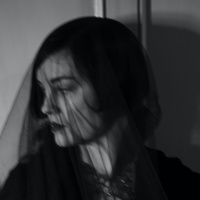
On refusing the concept of the tortured artist
Prelude
Sara Jin Li is a multidisciplinary artist whose work spans stage, screen, and print. Primarily a filmmaker (director, producer, and occasional actor) and an essayist, Sara founded Project Consent, which won a Webby award in 2017, and has worked with the White House, HBO, and other initiatives to end rape culture. She has reported on culture and politics for Vogue, Cosmopolitan, Elle, Paper Magazine, and her multi-year cult investigation for The Cut was named a “One Great Story” by New York Magazine and an Apple News Editor’s Choice. Her first book, All Things Friendship, is available wherever books are sold.
Most recently, she produced the first season of Public TRANSit, a podcast about the trans experience. Sara is also the Chief Brand Officer at Irregular Hours. You can find her on Instagram and Substack.
Conversation
On refusing the concept of the tortured artist
Multi-disciplinary artist and writer Sara Jin Li discusses inventing opportunities for yourself, struggling toward love, and not living a small life
As told to Sarah John, 2346 words.
Tags: Writing, Film, Podcasts, Adversity, Mental health, Inspiration, Success.
I just saw your recent Instagram post. I really appreciate the sentiment you stated, about how you’ve gained success through being young and scrappy. I think that you’re really good about seizing opportunities. You’ve been successful in a variety of fields, from writing to directing. Tell me about finding opportunity and building opportunity.
I’m trying to think of how to phrase this. So, I am an immigrant. I think I’ve been very loud and proud about being an immigrant. I have such an interesting relationship with the word opportunity. When you move to America from anywhere that’s not from the Western world, you’re told constantly that America’s the land of opportunities.
For me, particularly in my childhood, I found that to be the opposite of true. I found that there’s actually not a lot of opportunities here when you are part of a marginalized identity. What I have found instead is that—as an artist and as a woman and as a queer woman of color—you kind of have to set yourself up to make your own opportunities. I think everything that I’ve ever really wanted in my life has always been something that I have come up with.
I really don’t mean that in an egotistical way. I just mean I have never applied for a job really. I have never gone after something that has already existed. Everything that I have made came from something that just didn’t exist before. So when I think about opportunity, what I think of is invention. There’s a lot of advice about seizing opportunities, but I also want to be realistic. A lot of people just aren’t in a position where doors are open for them.
I never want someone to think that just because you can’t see the door being open for you, that means that you can’t make your own [opportunities]. I was very landlocked. I was in Kansas. My family did not come from wealth. We didn’t have any connections, period. Rather than, I think, exerting a lot of my energy when I was younger trying to sink my hooks into something else and dragging myself forward, I spent a lot of time investing and creating something that belonged to me. I found that even as I get older, I’m not necessarily looking for opportunities around me. I’m looking for opportunities to create and invent whatever is in front of me and within me.
That’s really powerful. My next question is, where do you go to seek inspiration?
Oh, people. I am such a huge extrovert. I have such a hard time being by myself, just because I think people are just so endlessly fascinating. I am just someone who likes to exist out in the world. I’m not kidding, six out of seven days, if not all seven days, I’m doing stuff. I’m going to events, I’m going to bars, I’m talking to people. For me, conversation is the core of all things on the planet. I will talk to anyone anywhere about anything. I will ask them the most insane questions. Inspiration comes from outside of yourself. I think the through line to all of my work is that they’re all stories about people.
On a similar thread then, Harvard Divinity School. I would love to hear more about that. Did that expand on your ideas about curiosity about others’ lives? Did that inform your work in a meaningful way today?
Yeah. I was mid-career, and I felt like I was doing a lot of the things I was supposed to do. At a certain point I realized I was chasing the form of things. I was like, “Okay, I wrote a book. Now I have to work on a second book.” It kind of made me feel a little bit disconnected from the actual thing that I cared about, which is people.

Travis Kelce for TruKolors Launch Campaign, directed by Sara Jin Li.
I also love Maggie Rogers. I think she is wonderful, and I really admire Philip Picardi from Teen Vogue. These are people whose careers I’ve looked up to my entire life, even though they have very different vocations. Seeing them go through the school and hearing them talk about their process, I was like, “Okay, this seems like a place where I can ask my questions about what it means to be alive on this planet. What does it mean to have a calling? What does it mean to be witness to suffering and joy? What does it mean to be witness to other people’s suffering and joy?”
I didn’t necessarily know what I wanted to study when I went in, and it changed over the course there. I thought I was going to write a play. I had this idea of what I wanted to do with my degree. Then almost immediately within the first month, I realized that what I was really passionate about is understanding radical love.
I don’t mean love in the way of a romantic feeling or even a feeling at all, but love as a form of action and a vocation. What does it mean to practice radical love in a way that lives through us and breathes life into our communities and moves within us?
Now I joke that, “Yes, I have a degree in love theology, but it’s a completely unknowable field.” It just means that I’m a scholar in the ways that artists in particular talk about love and what it moves them to do.
My final project at Harvard Divinity School ended up being a collection of essays called Love is the Antidote to Extinction. Over the course of my studies, I wrote this collection talking about … I think there is this held belief that human beings are awful, that we are doomed, that all human beings are bad, that it’s in our inherent nature to destroy and blah, blah, blah. I think my argument and my studies have shown that I actually think that human beings deeply love one another. Because if the argument is that we’re responsible for war, genocide, famine, all these horrible things, then by that logic, we should be extinct right now. If at our core we are these destructive, evil, selfish beings, then there’s no reason why any of us should be alive today. But the fact that we are is because for every atrocity, there’s a group of people who have stood up and wanted better for themselves and for their neighbors.
I, in particular, was at Harvard during the first year of the genocide. I remember particularly being very moved by this story in The Nation of this teenage girl who talks about how she is alive because of her neighbors—because of her father, because of people who shield her, physically shield her from danger.
I think about how we are kept alive by our love for one another. We have survived extinctions, we have survived genocides, we have survived war and all these awful, horrible things because people loved each other enough to help and to carry each other when they cannot walk.

‘Bimbette for the Your Little Girlfriend’ music video, directed by Sara Jin Li (DP’d by Michael Elliott).
That’s very touching. It reminds me of this great James Baldwin quote about love and happiness, not in the American sense of satisfaction, but something that you struggle for.
Yes, absolutely. And that is a thing I quote, I think in the first page. I’m not talking about, “Oh, I love you.” I’m talking about love as a movement, not a feeling.
Yeah, as a struggle, a continual struggle.
Yes. And it’s hard. It’s so hard and it’s something that we betray. It’s definitely the most personal body of work I’ve ever had. Yeah, that collection is so, so, so in my bones.
Totally. Okay. So next question, you’ve been doing this for a long time—activism, writing. You’ve been working on things that are emotionally tough, take a sort of moral courage, and are draining. I’m curious, how do you remain hopeful and excited about work that can be so draining? I think this speaks probably to your earlier answer, you persist because of the love of people, but I’m curious if you have other thoughts in that arena.
I have kind of made it a point, especially in the last year, to just enjoy life as much as possible. I recently had someone tell me, “When I first went through your Instagram, I was not expecting you to be as chipper as you are.” That is actually a comment that I get a lot. I think I am someone who feels so, so, so deeply, and there used to be a time when I used to lean towards the heavier side of life. I thought, “I’m an artist, I have to tap into all these emotions of rage and grief and et cetera to produce art.” I have found that to be categorically untrue. In fact, the more that I chase joy, contentment, love, and all these beautiful parts of life, the more poetry I actually am able to have. I think I am so anti [the idea of] the tortured artist. I think it’s so important to have levity in your life. Silliness is kind of how I stay grounded.

IHATEMODELS for Requiem for Synths, produced by Sara Jin Li (directed by Mitzi Peirone).
I think it reminds me of Mariame Kaba and her saying hope is a discipline. I think joy, it’s very effortful actually to curate joy in your life.
It’s so hard to do. I do believe we’re living in a time where the forces-that-be want you to stay at home. They want you to feel disconnected and isolated. They want you to be angry and in despair, and feel hopeless. You have to exercise your muscles against that. For me, what that looks like is, I will sit with a friend in our living room. I will spend time with people. I will get ice cream after every meal.
I will do these little things that bring me joy—even if they look stupid or even if they have no material benefit—because yeah, I think the systems-that-be benefit from people feeling powerless.
Okay. You also, I think, are really good at risk tolerance. You call yourself an award-winning and losing artist. You posted a CV of failures. I’m curious, how do you build that risk tolerance?
Yeah. I think I very quickly in my life identified that I’m not afraid of rejection. I’m afraid of inertia. My biggest fear is not being told no, failing publicly, getting brutally rejected, or any of those things. It’s staying still and not being able to move. When I think about what is the thing that feels most paralyzing, it’s that I never try and I’m in the same place as I was last year or the year before. So knowing that rejection, humiliation, and all those things are not the worst thing that can happen really gave me so much more freedom, to just pursue anything I want with reckless abandon.
There are so many things that I failed at, and failed at publicly too. Not everything I touch turns into gold. There are certainly things that I’m just not good at, but I find that after trying them…Rejection never killed anyone. It’s never stopped me from doing ultimately what I love. [You should know] you can move around rejection and embarrassment. Those are things you absolutely can and have and will get over. But I don’t think I can ever get over having a small life because I just didn’t have it within myself to take a step.
It makes me think too of you talking about doing things for the love of people. I think a sentiment I feel a lot and my friends feel a lot is like, imagine if James Baldwin had let the rejection and the real poverty he suffered keep him from creating. Your response reminds me too that if you live a small life, so many people suffer.
Right. The ego is such a funny thing. Because when people talk about rejection—and I also went through this phase—I’m just like, “You are not the first person on this planet to be rejected. You are not the first person to have to overcome a hardship to get what you wanted.” Countless dozens of artists have gone through tremendous trials to get to where they are. You are not unique in your suffering. I think there is something really, really grounding about remembering that there is nothing special about pain. There is nothing unique about pain. You are not the one person who’s had it bad enough that you can’t do anything with your life.
Sara Jin Li recommends:
Going out in the East Village (weekdays only), particularly fond of Bar Snack, June Baby, Good Time Country Buffet, Thursday Kitchen, Death & Co (Hi Kyler!), Poetica Coffee, Mister Paradise, the Immigrant, Ding-A-Ling (Hi Sonny!), Elsewhere Espresso, Romeo’s, etc.
The artist Oxis; electropop is my favorite music genre and I listen to Long Sardine almost every single day.
Making an effort to get to know people and initiate plans. I hate this culture of ‘thank God I get to cancel plans and stay in and never see anyone’—everyone go out and be a villager right now!!!!!
Tiny Beautiful Things by Cheryl Strayed, which I’ve gifted to at least 8 people and reread at least once a year
Any poem by Richard Siken, but especially “Paragraph,” “Boot Theory,” “Line,” “You Are Jeff,” “The Long and Short of It,” and “Black Telephone.”
- Name
- Sara Jin Li
- Vocation
- writer, artist, actor, filmmaker
Some Things
Pagination