On the importance of resilience
Prelude
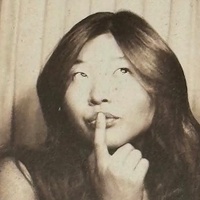
Effy is an American professional wrestler. He currently works for Game Changer Wrestling, where he is a former GCW World Champion and GCW Tag Team Champion with Allie Katch. He also promotes Big Gay Brunch events, focused on LGBTQ wrestlers in the American independent scene.
Conversation
On the importance of resilience
Professional wrestler Effy discusses how to change your industry, transitioning to a full-time creative career, and making yourself into spectacle.
As told to Katherine Cusumano, 1760 words.
Tags: Performance, Activism, Sports, Success, Money, Process, Collaboration, Income, Identity.
Let’s go back to the beginning of your career. Did you grow up with pro wrestling?
I did. My dad was a big fan of your Ric Flairs, your Ricky Mortons and Robert Gibsons and the Rock and Roll Express, your Four Horsemen and Dusty Rhodes. And he never presented it to me like it wasn’t real. I think everybody kind of knows that there is an agreement in wrestling. We are not normally trying to kill each other, which—sometimes that’s not true. But I had it presented to me at a young age as, like, here were tough guys who had swagger. That, coupled with the crazy male physique … My young mind, as a child who’s figured out that he’s gay, was like, “Wait a second, this is how you do this? This is what you wear?” I was drawn to the violence, to the spectacle. But there’s also a very erotic tension to the whole thing that I think also made me a little hesitant to get involved. These guys are out here in sparkly glittered panties, telling each other they’re going to steal their gold belt? Having someone like my dad, who’s very masculine and traditionally Southern, being like, “This is what the cool guys do,” I’m going, “Is it? Because it seems like we have different tastes in cool guys.”
What tipped you from the wariness of that performance of gender and sexuality into wanting to be in the ring and making it an integral part of your character?
I used to drink a lot, and at 23 I found sobriety and was coming out of an inpatient program. I came out to my parents—I sort of had to come clean to them about who I really was, to get the pressure off of me. And I started wrestling training. Wrestling became this therapeutic thing where, like, I can process being afraid of what people are going to think about me being a gay man by being an annoying, terrible, yell-at-me, piece-of-crap, heel, gay man. And it sort of builds this skin to where, when you’re in public and somebody calls you something, you’re like, “Well, I’ve been paid to be yelled at on purpose before for the same things.” It sort of dilutes it. I think it gave me a real sense of strength; not only was I getting over my fears, I was giving other people a feeling of not having to put up with this shit.
I have heard from other wrestlers that their in-ring persona, starting out, ends up being an extension or amplification of their real life persona. And it sounds like for you it was the opposite, where your in-ring persona was helping inform how you were moving through the world in the rest of your life.
It felt like I was able to take off the censorship button on myself. I could take this back into the real world with me and go, this has actually given me the strength to be more annoying, or louder, or more gay than I would’ve been.
The wrestling industry’s attitudes toward queer performers, especially in the WWE, has not always been especially kind. I am curious if you have seen this evolve.
I think sometimes people look at me and go, “You’re leaning into the gay thing a little too much.” I wouldn’t have to, if we were allowed to do things in public, if other LGBTQ people weren’t being attacked, if non-binary people weren’t being treated like they’re not valid, if trans people weren’t being dismissed completely. It’s like, if I can have the privilege of being a large white cis man who is also gay, I’m going to try to get in front of this thing and be as gay as possible—to clear the path so that the people coming after don’t have to fight that same battle. I don’t mind taking the heat as long as it can open up the world to other people. I want to be the guy at the front of the line with a machete, cutting through the jungle. I want to be the one that can be a little more crazy, a little more out there, to deal with these things so that other people coming through can be themselves completely.
How have you managed to forge a path through this fairly complicated ecosystem of promotions, of different ways that you have to cobble together making a living as a wrestler?
The first step is to be really good at the job. There’s a lot less shit people can give you if people are paying to come out to see you, if people are tuning in to see what you’re doing. You get away with a lot more if you’re really good at your job. In my life, there’s always been the idea of the gay overachieving child. And I think in wrestling, I’ve kind of jumped into that too where it’s like, I can’t just be on the show. I need to be the show. It makes it easier when personal disagreements or issues come up with these people who are running companies. You can point back to the product and say, “Well, I kind of overachieved here, so I think I’m allowed to be a little opinionated.”
How did the Big Gay Brunch, your showcase for queer wrestlers, come about?
Frustration. I reached a point where I was looking around, and the shows that were running that were queer, it was very difficult. It was not being sustained long-term in these promotions, and it was very hard for them to get funding. I had a great relationship with GCW; I had a great relationship with Brad Lauderdale over there. I said, “Look, I’m going to book this show, and someone’s going to run it.”
The first year, it got canceled by COVID. When we finally got to do it, at that point there had been Speaking Out in wrestling, there was COVID in wrestling. We were finding out a lot of people weren’t who they said they were, were abusing people, were treating people poorly. So the card that I booked was very much a less famous card, and more only people I know by real name and trust. And with that, we introduced an audience to a lot of new wrestlers.
I figured out I can’t convince a bigger company to do what I tell them, but if they see something succeeding, or if they see something making money or see something growing in popularity, they will copy it. The only way I’m really going to change things in the business is to keep being successful as a blueprint out here and letting them copy it.
Do you still have a shoot job?
No. I’ve been full-time wrestling since COVID started. I’m kind of stubborn about it. It has its disadvantages, but I’m going to do it until I can’t. Every time I get into an Uber and I say what I do, the first question is, “Well, how long can you do this?” And I go, “As long as I want to.” I see a place where my knowledge, my expertise, whether it be agenting matches or running shows, or helping people train, doing seminars—even if it’s outside of active competition, there’s still a place for me in wrestling. For me, it’s kind of a puzzle that never ends. And if I get bored of the puzzle and I don’t want to do it anymore, I’ll walk away and do something else. But right now, the more I put into this, the more weird stuff happens that I can’t really explain. And I’m kind of addicted to the fact that I never expected to end up here.
At what point did you realize that you could make a living just through your creative work?
I used to run a moving company in Florida. But I got to the point where I realized that I’m diminishing what I can accomplish in wrestling by not jumping into this full-time. Pre-COVID, I was doing really well, but I was missing out on bookings. It’s awesome to have a big-boy salary; if things don’t work out on the weekend or you lose money, it’s okay, because you have a backup money plan. I made that jump at a time where I probably could have eaten more shit. I had already left my job, and then COVID hit and I was moving to Atlanta. It was like, “Now the world is shut down and you have to figure it out.” Being in that position became sort of a calling card for everything. I’m going to take the work, I’m going to take the job, I’m going to do it. Whatever it takes to make this work, you have to make this work.
You mentioned people saying, “How are you going to keep doing this? At what point do you have to stop wrestling?” How do you keep up the physical side of it?
In some ways, my body is calloused, which sounds not-great. There are plenty of instances where I could have been injured, and I’ve been very lucky, where it hasn’t been anything permanent or terrible or bad.
I’m willing to take the suffering to get to the thing. I usually joke at seminars: “How do you eat a piece of steak in wrestling? You have to eat a whole bucket of shit, and then at the bottom there’s a piece of steak.” I’m not telling anyone they should eat shit, but a lot of times, suffering through eating the shit is the only way to get to the next piece of steak. And I think people see the reputation I have online, they see the way I am promoted, and they assume I don’t have to eat that shit anymore. It will never end. You’ll never stop pushing the ball up the hill like Sisyphus. But if you’re willing to tolerate it, there is good on the other side.
- Name
- Effy
- Vocation
- professional wrestler
Some Things
Pagination