On friendship and collaboration
Prelude
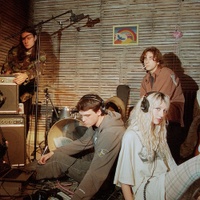
Rostam Batmanglij, known as Rostam, is a GRAMMY Award-winning songwriter, producer, and composer. One of the founding members of Vampire Weekend and producer of their first three albums, he has been described as one of the great pop and indie-rock producers of his generation, having produced for some of the most important artists of the last decade including Frank Ocean, Clairo, Charli XCX, Maggie Roggers, HAIM, Solange, Lykke Li, Santigold, Carly Rae Jepsen, Hamilton Leithauser and many others. In recent years, he has maintained a varied and intensely busy career, releasing two critically acclaimed solo albums—2017’s Half-Light and 2020’s Changephobia—while also producing records for HAIM (2020’s Women in Music Pt. III and 2025’s I quit), Clairo (2019’s Immunity), Vagabon (2023’s Sorry I Haven’t Called), Leith Ross (2025’s I Can See the Future), and Georgia (2023’s Euphoric), as well as composing for film and television, including 2016’s The OA and 2023’s The Persian Version. 2026 sees the release of his third studio album American Stories.
Conversation
On friendship and collaboration
Musician and producer Rostam discusses knowing someone before you create art together, chasing an idea no matter what it takes, and subtly sharing your views with people who might disagree.
As told to Max Freedman, 2217 words.
Tags: Music, Collaboration, Identity, Politics, Process, Production.
You’ve released your solo albums roughly four to five years apart. Is that a function of your natural creative pacing as a songwriter, or is it more of a function of, you’re also doing a lot of production work for other folks?
I have a natural alternating [cadence] between working on my own project and working on projects where I’m an outside producer. I like being able to have those different days, different months, different years when I’m really devoted to only my own project and others when I’m devoted to other people’s projects. I like having those two outlets. They scratch different itches for me.
It’s possible there will be long periods of time where I’m only focused on producing outside projects. There might be a decade where I’m only doing that, and there may be a decade where I’m only focused on the Rostam project. I could imagine both those realities coming true. For me, there’s a lot of joy in the open road in front of me and not knowing what lies ahead.
I’m interested in your use of the term “outside producer,” because when I hear that, I think of somebody who’s coming in on a song that’s already written and helping to produce it, but you’ve also done work writing and producing whole albums with HAIM and Vagabon. I’m curious if there’s a distinction for you between an outside producer versus an inside producer.
If I look back at various records I’ve made throughout my career, they’ve all turned out quite differently or come about differently. And yet, there are strands that seem to be common. I love starting songs with artists from scratch. I’m also happy to make albums with artists where they are the sole starter of every song on the record and our collaboration is about finishing every song together. If I look at something like Modern Vampires [of the City], the third Vampire Weekend album, about half those songs, me and Ezra started in a room together, and about half those songs, Ezra started on his own and we finished them together.
If I look at Claire’s Immunity, there’s a similar combination of, there were songs that Claire not just wrote but began recording fully on her own—about half of that album. I came in at the end to collaborate with her as a producer, and then, half those songs, we wrote from scratch together in my studio.
I love the challenge of taking collections of two sets of five songs and making it feel whole. That’s a joy to me. I relish in that responsibility, and I’m so grateful that I could come together with Claire and Ezra in those moments and make two records that, perhaps from an outside perspective, seem so different. To me, there’s ways that they’re quite connected.
I like that you’re saying Ezra and Claire instead of Ezra Koenig and Clairo. To me, that shows that you have a friendship with these folks, that they’re not just collaborators. It makes me wonder, in your creative life, how has producing and writing with other people been a gateway to friendship? And similarly, if you’re doing creative work with somebody you don’t know yet, how do you approach that?
I think the answer to your question is, I’m probably not a producer that you can hire. That could change, but at this point, it’s probably unlikely.
It seems as though I enter into these creative collaborations that include friendship, and it relates back to my philosophy of what a producer is. I think a producer’s role is to help the artist realize their vision, or for there to be a shared vision that you realize together. I find that, oftentimes, the records I make are with artists who are also producers in their own right, so in a way, that’s distinct from, say, the relationship between a director and everyone else on the set of a movie. The album-making process requires this meeting of the minds that, in some ways, eschews hierarchy. The artist is absolutely in charge, and yet, I think it’s when an artist trusts a producer, or when two producers trust one another, that the most profound work comes about.
That’s something I love about album-making, that it’s a meeting of the minds, and it’s not necessarily one person who’s in charge. It’s an exchange of ideas. It’s a tussle sometimes. It requires advocating for your ideas. It requires stepping back and knowing when it’s important to put your collaborator and their ideas ahead of yours. It’s this dance that I love about collaboration, specifically across an album. I think that’s where it gets really interesting.
I appreciate you talking about yourself primarily as a co-producer, because that’s how I see a lot of your work. At the same time, one of the things I like about your production style is that I can very often hear you in a song you’ve co-produced, especially in some of the drum tones. I was curious not just how you developed your production style in the first place, but how you’ve maintained it over nearly two decades of working in the music industry.
I’ve got to keep some trade secrets. It’s funny, people have asked me, “How do you record drums?” The answer is, it’s a little different every time. I have a general sense of what I’m looking for. I think there’s a way I feel when I hear drums coming out of speakers that I like, and I won’t stop until I’ve found that thing that I’m looking for.
I would reveal that it’s very much a physical response. When I have a physical response to the drums as they’re coming out of the speakers, that’s when I feel like they’re right, and I’ll do all kinds of things until I get there. There’s a laundry list of things I might do to get to that place, and I’m not a purist, although there’s certain things that I go back to time and again, like using tape, using something called the SPL Transient Designer and, some would say, abusing tape and abusing the SPL Transient Designer.
I hope this doesn’t come off as arrogant, but I think you could lock up a thousand chimps with tape machines and SPL Transient Designers, and I don’t know if they would arrive at the things I arrive at in terms of making drums sound the way that they do. It perhaps is some kind of a neurodivergence. It’s like, I need it to do a certain thing, and I won’t stop until it does that thing.
With American Stories, I hear, as the name implies, more of an Americana and country influence on the music that I haven’t yet heard in your solo work. I was curious how you went about getting comfortable incorporating that kind of style into your songwriting.
I started making this record with an idea that I wanted it to be the album that integrated Persian music more fully than I had ever done on an album. That was one of my goals going into making this record. At some point, I had a realization that I could keep that goal but also make this my most American album. There was a thrill I got out of arriving at this double conclusion, like, “This can be your most Persian album musically, and it can be your most American album musically.” The two can live together. Figuring out a way to make those two things not just live together, but feed off of one another, is a worthwhile pursuit, and it’s the kind of challenge that makes me excited about music on a fundamental level.
Now that you mention it, if I were to play the album on loop, the sitar loop at the end of “The Weight” could transition neatly into the twang at the beginning of “Like a Spark.” I’m curious if you have more to say on that.
The instrument is actually called a saz. There’s a couple different saz. There’s electric saz and acoustic saz. These instruments have different names, and they have different evolutions and origins. And there’s an instrument in Persian music, which is called a tar, which is tuned identically to the saz. In many ways, these are different strands of Middle Eastern music that come from shared traditions. To really put a fine point on it, there is an instrument in Persian music called a setar, which is distinct from sitar and, in Persian, is the word for “three,” so it means a three-stringed instrument.
I noticed toward the end of the album, lyrically, some lyrics that allude to the fight for liberation in Palestine. It made me think back to, right after October 7th, you being one of the musicians I saw actively saying, “Hey, we need to talk about this.” As borderline inane and silly as this question is to ask somebody of Iranian descent, I’d love to hear you talk about the power of using your platform as a creative person.
Something I’m interested in is entering the consciousness of people who may believe that they disagree with me or can’t see eye-to-eye with me. That seems like a worthwhile pursuit. For this reason, I never want my politics to be something I beat people over the head with. I want the political component of the music I make to be something you have to arrive at through spending time with my music. I don’t think that’s too much to ask because you could also choose not to spend time with my music, and I’ll be okay with that.
We live in a political environment where speaking out can lead to all kinds of repression and consequences. It shouldn’t, but it does. I was curious if you’ve faced conflict with your collaborators—or with anybody else you’re working with to put music out—when you’ve spoken so correctly, but in ways that people seem to disagree with, about politics.
My fundamental desire is not to coarsen the dialogue, and I see that as something that we as a culture are trending toward, the coarsening of dialogue between what are seen as opposing viewpoints. I simultaneously believe that there’s a generation of people who will not allow themselves to have their viewpoints reduced and will not allow propaganda to sway them. It’s a generation younger than my own, and that gives me a lot of hope, so I’ll leave it there.
To bring this conversation home and talk more about creativity again, whether you’re writing or producing a song, and whether it’s for yourself or in collaboration with somebody else, how do you know when it’s done? As loaded of a question as that may be, because, is anything ever really done?
You’re reminding me of a lyric I wrote for this album, which is, “Maybe the greatest art is never completed / We only have to leave it knowing we tried.” On that song, which is called “Hardy,” I’m comparing how a person could look at a relationship with how a person can look at their own art. It reminds me of this idea that the last stage of finishing something is putting it out into the world. It’s not really yours until you’ve let it go, or it’s not—if you think of art-making as a form of expression, there is a way in which releasing it into the world is a component of the art-making process, and a necessary one.
When you mentioned “Hardy,” it made me realize that Clairo seems to be the one guest you have on the album, even though you have all kinds of friends and collaborators. Why was Clairo the right one?
I remember hearing about who [Clairo] was at a party in 2018 or ‘17. I remember someone describing her music and saying, “Just go listen to it.” I went home, and I listened to it, and as soon as I heard her sing, I felt some sort of deep resonance with the timbre of her voice. I felt like there was something comforting about her voice, and something familiar and something that gave me hope about the future, if I’m totally honest. My experiences with her in real life, from getting to know her to making Immunity with her, confirmed that those qualities of her voice are expressed in who she is.
The bridge of “Hardy” was something I wrote that didn’t fit in my register. I felt like it was either too low or too high for me. I was curious what it would sound like if she sang it, and I started to imagine her voice singing it. The more I imagined it, the more it made sense. I asked her if she was interested in making a guest appearance, and she was, and I’m very grateful for that.
Rostam recommends:
Five IG accounts as recommendations to follow for independent journalism
- Name
- Rostam
- Vocation
- musician, producer
Some Things
Pagination