On knowing when it’s right
Prelude
feeble little horse is naturally delighted to present their third full-length LP, bitknot. The album was written, arranged, produced, and recorded by Sebastian Kinsler, Lydia Slocum, and Jake Kelley across their respective homes in Pittsburgh, Pennsylvania. All art was designed by Lydia, all tracks were mixed by Sebastian, and the final tracks were mastered by Heba Kadry with assistance from Jacob Clements. A project always and simply spurred on by the motivation of being the best band in the world, this collection of 11 songs slowly percolated over the three years that have passed since their acclaimed sophomore album, Girl with Fish—a digitally-altered noise rock shockwave that not-so-gently shepherded them everywhere from the arid Coachella Valley to the historic riverbanks of Paris.
Conversation
On knowing when it’s right
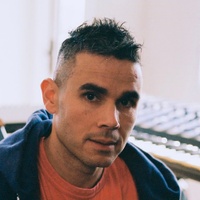
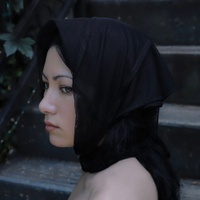
Musicians Lydia Slocum and Sebastian Kinsler (feeble little horse) discuss maintaining your identity when a collaborator departs, trusting your gut instinct, and using a band as an excuse to create so much more than music.
As told to Max Freedman, 2917 words.
Tags: Music, Collaboration, Creative anxiety, Identity, Process, Success, Day jobs.
After you put out Girl with Fish, but before you toured it, you went on hiatus due to the pressure of the attention, but eventually, you came back. How did you know it was time to put out another album?
Lydia Slocum (lead vocals, bass): We looked at the computer one day and realized we had six songs we could use, because we thought we couldn’t use them, and then, we realized, “Oh, we basically have an album.” We kept working on it and editing all the songs. Even though some of those first songs were worked on three years ago, a lot of it came to fruition pretty quickly once we decided we were making an album. It just jumped up behind us like, “Oh woah, there’s an album already.”
When you said you weren’t sure you could use these songs, what did you mean? What was the uncertainty there?
Lydia: We weren’t all on the same page as a band. Our previous member, [founding guitarist] Ryan [Walchonski], was in a different city, and so our thought was that we would all get together and write the next album in person. With the songs me and Seb were working on by ourselves in Pittsburgh, we assumed they couldn’t be feeble little horse songs because it wasn’t the entire band in a room the way we were planning.
When Ryan evolved out of the band, we realized, “Oh, these can be feeble little horse songs.” It was almost a matter of Ryan’s blessing of just being like, “You guys, you got it.” He let us go, and we ended up having more songs.
How did you learn to operate as feeble little horse without Ryan? With the caveat that it sounds like that was already happening.
Sebastian Kinsler (guitar, production, multi-instrumentalist): There were a couple songs we made before that had minimal input from Ryan, so it wasn’t super scary to be like, “Oh my god, how did we do this?” It was something we’ve already done a couple of times before.
Lydia: “Freak” and “Heaven,” two very different songs that landed pretty differently, were made in Seb’s kitchen. It was a little scary though, but…
Sebastian: It was definitely a lot of pressure.
Lydia: It was more about the unknown. The scariness is kind of now, putting the album out, will people be clocking it? Where’s Ryan? But I feel like it’s a pretty fluid project in a way, and we’re still just as much feeble little horse as we were. It’s a different process, but almost not that different since we were in the same city already, maybe starting a side project that melded into this album. It wasn’t really contemplated while we were writing. It just kind of happened.
What’s the breakdown of remote recording versus in-person recording with bitknot? What are the challenges that come with recording remotely, and how do you conquer those challenges?
Sebastian: I don’t think bitknot is anything remote, except for when I would come up with a beat by myself, but then after that, Lydia and I hang out and write melodies, or Lydia comes up with a melody and we record it together. This was our most in-person record we’ve ever done, by a lot.
Lydia: I didn’t even really think about that because, way back, starting off, it was remote, at least for me, because I was at school three hours away, and I would get a track that was basically done. It just needed me to sing over it, and then I would put it into GarageBand and work on it. But for bitknot, it was like, even if Seb had basically built the song already, my part wasn’t sending vocals over iMessage. I was in the room singing. We were working on it together.
Sebastian: This has the most amount of songs you and I started from scratch together, like “Doorway,” “Dior,” “Shady.” There was no song, and then we hung out, and then you left, and we had a song.
With the increase in working and recording in person, what were some new challenges or new things that were easier?
Lydia: We’re neighbors right now. It was fun to just walk over, and I would kind of look scary. I felt like people were crossing the street when I would come by because I was singing into my phone because I didn’t prepare—I’m trying to figure out what the melody should be. I have voice memos of me trying to figure out “DMT” and it’s super weird, stuff we didn’t use. That was fun, being walkable.
I think it was a bit more painstaking because we had so much time. We didn’t settle, ever. Maybe we settled, but anything that could potentially be fixed or changed, we would sit and fix. We would sit for hours on one word. For “Dior,” I was like, “I think I need a take two, that first little bit.” I don’t even want to share what it was, but it wasn’t good. We were like, “We have to change this.” There were so many rules: how it has to rhyme, what it has to mean. It was so not inspired. It was painstaking. That was a little different, because especially with Hayday, it was just inspiration in the moment, whatever we want, boom, it’s perfect. And then with this, it was like, “It has to be perfect.”
When you’re spending hours getting one word right, how do you know, “Wait, we need to say this is done. We need to stop.” What’s the sign that, at least for now, it’s done?
Sebastian: You just know when it’s good, you’re proud of it, and it feels good to sing. You know when it’s wrong. Sometimes you don’t want to admit when it’s wrong, but it’s wrong and you know when it’s right.
Lydia: I also think it’s just once we agree, because I might be like, “It’s done, it’s done.” And then you’re like, “No, it’s not done.”
I try to put it onto Sebastian sometimes. I’m like, “Do you really like that one lyric, though? You don’t like it. I can tell you don’t like it.” And it’s me who doesn’t like it, but I don’t really want to commit to changing it because, if it’s good enough, then we should just leave it. It’s basically, once we can agree that it’s good enough and it just feels exciting and right.
Sebastian: It is so sick to have an album with 100% nothing I would want to change. Some of that Hayday stuff, and even Girl with Fish, you hear a line and it’s like, “Did you really… Come on.” Shit that I wrote or we did together for those.
Lydia: I agree. I listen to bitknot, and the only fear I have is, “Ooh, I really said that,” but I don’t regret it.
bitknot’s Bandcamp description mentions something about the quest to be the best band in the world, which I believe because what band wouldn’t want to be that? But on the other hand, I’m like, “Is there more of a creative goal than that?” So, what are some of your other creative goals with feeble little horse these days?
Lydia: I feel like there’s a lot more to it, at least in my mind. Thinking about the whole thing that happened with Girl With Fish, where it was so much more well-received than we thought and we got this Anthony Fantano review, and then we didn’t tour, it was painful to see all this missed opportunity just because things weren’t aligning. Now, it’s more plausible for us to seize opportunities. That’s the goal, opening more doors and leaning in as much as we can.
This is our full-time job now, which is totally different than our last album. It at least allowed me to really lean into all the visuals and make it my full-time job. I’m like, “Oh, today I need to turn a fish tank into a kitchen.” I just make tasks and I’m like, “I have to do it for the band.” We’re just trying to run a little faster and see what we can catch.
Around the time of Girl with Fish, in some interviews, you said that you never wanted this to be your full-time job, just something you do for fun, so going full-time is a complete 180. How did you come to the decision to do this full-time, and how did you know you could?
Sebastian: We felt a lot of pressure after Girl with Fish, and we felt like, if this was our full-time job—we’ve seen bands commit to the band, then stop innovating in their music and just recycle the same ideas. But I think with Girl with Fish, we proved we’re a band that doesn’t really have a sound. We don’t have one thing we stick to. We realized we can do our own thing, get weird and different, and people will still listen to it. There’s not really a pressure with going full-time that it’s going to change the music, which was my biggest fear with doing that.
Lydia: I secretly wanted to be full-time. I was less scared to go full-time because I just felt sure. This is probably a bit foolish and what most artists think, but I was like, “We’ll never change. We’ll never get influenced in the wrong direction.” I felt kind of unstoppable, but I was down. I was in school and I had three jobs. I was doing 50-hour childcare weeks the summer we did Coachella, which I feel like I’m going to brag about to my kids. I’m like, “Don’t complain. I did 50 hours.” I have that ready.
It just made sense. For a while it was something we could decide on, but then eventually it was like, “I don’t have to keep this job. We’re doing well enough that I don’t have to keep my other job.” We just leaned in. It wasn’t a big decision. It just kind of happened.
Can you talk about why, creatively, recording yourselves rather than working with somebody else on that is so important to you?
Lydia: It’s all we know. That’s all we’ve ever done. And I’m very superstitious. I like things to stay the same. If we figure out something works, I’m like, “We’ll just keep doing that.” We live in Pittsburgh too, so it’s pretty easy to do things yourself because everyone’s so supportive. It doesn’t feel like we’re slamming the door on some crazy studio that’s begging for us to record there. This is just what makes sense.
Sebastian: We’re also a super different live band from the records. We don’t have songs you can just perform and lay down. It wouldn’t work to go to a studio. It would be a dogshit record. It would be no fun.
Lydia: Someone would be breathing down your neck as you record with the computer. I can’t picture it. It’s just not how it works.
Sebastian: Or we’d rent a studio that’s only us there, and then we’re paying so much money to do the same shit that we could do at home.
To zoom out a little bit, looking back at where you were on Hayday, what’s something you know now you wish you had known around the time you were starting feeble little horse?
Lydia: I wouldn’t really change anything, but I don’t think I needed to be as nervous as I was to perform. You don’t need to be scared, girl. Just go up there! But it was a lot scarier back in the day because we would practice three times a year, so I didn’t know my bass part.
There’s this quote I can’t think of that has this Amish woman carrying this little puppy, and it’s blurred and it’s like, “What is coming is better than what has gone,” or something. I would look at that all the time in college because I was depressed. I think I would just tell my younger self, “Girl, that’s true. What’s coming is better than what has passed.”
Sebastian: I wouldn’t really change anything about Hayday. I’d maybe tell myself about mic positions that will sound better on the drums.
Lydia, I take it that practicing more often, committing more time to feeble little horse and being together, was part of how you got over your nervousness. Were there any other conscious steps you took, or was it just the inevitable result of keeping on doing what you’re doing?
Lydia: I got medicated! So that helps. Every day is a breeze. Actually, I still get nervous, but I don’t get as nervous. Practicing, just having it down, it’s like muscle memory now. It was not muscle memory then. I was consciously looking at every single note I was playing. It was painstaking. Being able to practice has changed it.
We’ve gone through so much and played so many shows now that everything I could be afraid of happening has happened, and it was fine. I’ve always been scared that I’m going to start “Freak” at the wrong key while singing for some reason. There’s two keys that float around in my head, and we just played in Utah, and I did start on the wrong key, but then I just went back in and was like, “key change.” It was fine. There’s different things you can be scared of, but after they happen, the power is gone because you already faced it. And our fans are awesome and they never make me feel bad, so that helps.
I loved “This Is Real” when you put that song out last year, but I’m well aware it’s not on bitknot and was your last song with Ryan. What do you two see as the role of “This Is Real” in the story of how you developed as a band and any ways you feel like you’re doing something different now that the band has three members instead of four?
Sebastian: “This Is Real” was the last Ryan song, and it was a Ryan germination, and it’s a big bang and it does a lot of different things. We were saving it for a record. We had it for at least a year before we put it out, but I think we all felt like it was the end of something: “Let’s just put it out, tie a bow on it, and then go somewhere new.”
Lydia: For me, it wasn’t as conscious. It was just like, “We could have had a whole album by now, but we’ve got this song that’s got five different worlds in it.” It was kind of the only thing we could work on, in a way, because we wanted it all to be collaborative. It was the one thing we could pick at, which I think is why it’s so weird, because we kept picking at it and changing things. Once it was finished, it definitely did feel like a conclusion, but also a prophecy.
Lydia, the entire time we’ve been talking, I’ve been noticing that there’s a sewing machine behind you. If there are other creative things you do outside of feeble little horse, whether or not you consider them part of your career, what does having other methods of creativity do for you?
Lydia: It’s my life. It’s my goal in life. I got my degree in studio art, and I make work in what I call the Asheley Catacombs. Asheley’s my sentient doll who is the secretary and treasurer of the Asheley Catacombs. I always am finding ways—I love feeble little horse so much, and I love to find ways to braid the two together. Any excuse I can have to make something—the band is such a fun reason to make stuff. I make the flyers, the T-shirts, all this stuff, and it’s the best reason to make things. I’m really grateful to have that platform, and it’s something I’ll always have in my pocket. I just love to create.
Feeble Little Horse Recommends:
Sebastian:
Reading George Saunders
Drinking coffee with cream and sugar in it
Eating ramen noodles at home so u can go out for expensive dinners
Never using an sm57 for anything and Autotuning your bass
Jake Kelley (drums):
getting wired off biddles escape cold brew while driving through the fort pitt tunnel with your gta online friends blasting “nine is god” by wavves through the car speakers…
Lydia:
living in Pittsburgh, Pennsylvania
making your own monthly calendars
adding an extra mattress to your bed to be princess and the pea
making curtains out of antique handkerchiefs (there are so many wasting away… they are the perfect little panels!)
wearing wigs
reading One-Dimensional Man by Herbert Marcuse over and over until you start to know what the words mean
covering your purse in broaches
buying a keychain in every state you visit
listening to Linda Perhacs record Parallelograms whenever it rains
deleting instagram and switching to neocities
- Name
- Lydia Slocum and Sebastian Kinsler
- Vocation
- musicians (feeble little horse)
Some Things
Pagination