On the necessity of confidence
Prelude
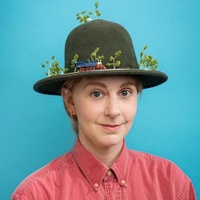
Dan Wriggins is a songwriter, musician, and poet from Maine, now based in Philadelphia. He records and tours with the band Friendship. His debut poetry collection, Prince of Grass, was released by Dear Life Records in 2024. Wriggins’ writing operates in the charged space between closeness and separation. His work collects fragments floating in every direction—from images, to gestures, to stray lines—and lets them accumulate until they feel inevitable, shaped less by explanation than by instinct and precision.
Conversation
On the necessity of confidence
Writer and musician Dan Wriggins (Friendship) discusses knowing what he's good at, feeling bolstered by finishing something, and making art for other people.
As told to Laura Brown, 3136 words.
Tags: Writing, Music, Beginnings, Family, Inspiration, Creative anxiety, Process.
I’m curious where your creative roots started. What are some of your first memories around writing? Or, where did you felt compelled to log or document something through words for the first time?
I grew up in Maine. My folks are kind of creative. Well, my mom is a potter and that’s been her career her whole life. So her job is an artist profession, but that has nothing to do with writing. I have this funny memory: one time I went home and looked at old stuff my folks had saved, and it included some ancient notebooks of journaling, from preschool or whatever age you learn how to spell. And I had this one page that was so good. Oh god, I think it said, “I do not know what to write. I would like to know what the heck to write,” and write was spelled incorrectly. It was spelled R-I-G-H-T maybe, and heck was H-E-C. But it was both adorable and profound. So I guess that’s a memory of an evidence of something. It might’ve been the earliest.
Do you think there are things from when you first started writing that tie into how you write now? Are there similar things happening internally that are pulling you somewhere?
You mean compared to when I was younger?
Yeah.
Oh, I think it’s changed a lot. In a way, it’s more mundane and professionalized. I guess I brought up that example of being a kindergartner, but it’s more like early teen, high school age when you start being like, “I want to write a song.” Back when I was in high school, trying to write songs—I don’t think I was writing any poems—I had this really romantic idea that inspiration hits you and then you jot stuff down. I’d try to write from experience. I guess it’s getting older [when you learn] that doesn’t always work. I mean, little moments and jolts are great, but there’s so much more than just sitting down to write. It often means I try to sort of do… what’s that? Automatic writing? It’s a surrealist technique, just trying to write things down that come into your brain, or you are reading and you’re writing while you’re doing it. It’s not in search of any ideas. It’s just in search of a combination of words that are cool together. So writing itself is the object. And you can still get to something that does describe an emotion or a thing in the world. It really feels like that has been a learning process.
Do you think that your relationship with editing or revising has changed over time too?
The process and the technique has maybe always been the same. I just get better and better at it. I went and did a poetry MFA a few years ago, and that was the one thing where at the end of it I really felt like, damn, I thought I knew how to edit. I thought I knew how to read through something I’d written very closely and how to hone in on every single word and make sure that word was meant to be there. But I didn’t know how to do that at all.
How do you think about silence or space in songs? Do you think spacing something out creates distance or pulls someone closer?
I never really know. When I’m writing a song, I’m often self-conscious about like, “Wait a minute, are these lines just way too far apart? Is this weird?” Then I’ll go and listen to more songs that I love and realize maybe they sing, or they don’t leave as much space—or they do, but it’s because it’s a guitar-centered song or something. So I do feel funny about it sometimes. For our songs, I feel like in general I leave some space compared to other stuff that I listen to. And I don’t really know what to make of that, because it does feel natural when I’m writing it. What do you think? Does it pull people closer or create distance?
I think it pulls people closer and…
That’s a leading question. You knew. [laughs]
Even in your lyrics, you talk a lot about distance by mentioning physical spaces like rooms or miles or crossing a certain barrier. What do you think it is about those markers that you want to put in songs?
Damn, dude. I don’t know. You’re so right, and I had not ever thought about it before. I feel like it does. To me, those types of elements are always evocative because they mean so much. They have so much metaphorical weight, and I feel like the metaphorical weight is doubled because it’s in a song, which is temporal. And so time and distance—which that’s what you’re working with—always seem like useful little metaphors for human existence, for living with people. This fact of how you can feel so close to someone and also cut off from them, or alone or distant or whatever.
When you’re writing, are you aiming for the moment where something clicks, or are you following moments that don’t resolve? How intentional are you about the role that each line plays?
I think when I’m starting with something—when it’s an early version of a song that I have come up with that morning, or whatever—it’s not very intentional. I mean, I’m just trying to get stuff in there and see what I can find, and often it’ll be disjointed. And I’ll often think to myself, “This could work as a disjointed thing. Other people make songs that feel kind of disjointed. Why can’t I?” And then almost every time I will keep working on that song and keep thinking like, “Wow, this thing doesn’t really fit. It could be a different line that’s better and really connects to the chorus or something.” And so I’ll slowly push out anything that doesn’t feel like it all cohered, which maybe is stupid or maybe doesn’t actually help.
In a way, I wish I had more songs that felt more like they weren’t all concentrated and focused. I wish they could also be super expansive. I think about songs that I love that have details and words and lines in them that seem to not connect at all to each other.
There’s this fragility of communication in your songs, between mumbling or mishearing something, or being a little cautious. Do you think that language fails us more because of what we say or what we avoid saying?
Technically what we avoid saying isn’t language’s fault. That’s your brain’s fault for not doing it. I love the question… Since I’m such a kind of intense word freak, I want to fall on the side of not saying stuff is what fails us. The more we communicate and the more words we can get out there, the less we will be failing each other. But that is too optimistic and stupid because people can say a ton and can be so communicative, and it still doesn’t help any. In my general outlook, I would say that it’s the stuff we don’t talk about that probably festers more and creates more problems overall.
You’ve mentioned wondering whether certain characters or concepts are too much to ask of a listener, specifically on the new album with “Hollow Skulls.” I’m curious how you feel about challenging a listener with an image?
I think it’s kind of essential to do it. With “Hollow Skulls,” I was kind of wimpy. I was like, “Oh, is this too much?” But it’s not. Barely. My favorite songwriter probably is Vic Chesnutt. I mean, talk about challenging listeners with images all the time. He’ll stick some big ugly thing into a song and it’s like, “Now I have to deal with this?” There’s a song called “Bug,” where it talks about some graffiti, talks about some roommates, and then he says, “Hotel full of Pakistanis / And a front porch filled with greasy greasy grannies.” And it’s like, “Dude, don’t say that. What are you talking about?” It’s such an obnoxious thing. I mean, is it a good line? I don’t really know. I think it is because it’s so weird, but it seems to have nothing to do with the rest. I feel like Vic would be a lot more popular if he didn’t do so many kinds of weird, ugly, gross things. It’s hard to wrap your head around. He just sticks it there and doesn’t hide anything. And then it hits the refrain, which is, “When the bug hits, that’s the time to scratch it.” And he sings that over and over again. I guess what I’m saying is, I love to challenge the listener with an image, and I wish I could do it with more bravery.
Do you edit those moments out sometimes?
Probably, yeah. I think often I’ll get something in there that’s really weird, and I’m like, well, this just doesn’t work. And maybe I’m right, maybe it doesn’t work, and it’s good that it’s gone. But also surely I could stand to think more critically about thinking critically and smoothing things over.
How comfortable are you talking about what you think your strengths are as a writer, and how did you come to recognize those things?
So comfortable with it. I mean, I kind of get confused when I see other people who seem to not know what they’re good at, even if they’re really good at something. And is it false modesty? Are you being modest about this, or do you really not know? I feel like the confidence is part of doing it well. I mean, I know that as a musician and a producer, I’m not that great. The worst is guitar. I’m fine at playing guitar for what we do, but I look at my friends, the people in Friendship or other musicians, and I got nothing on them. I have no fucking special spark with playing the guitar and I don’t need to. I’m good at writing the songs. And more specifically, I know which type of songs I’m good at writing and which I just can’t touch, and which I can touch a little bit. So I’m trying to push with it.
Kind of the same with poetry. Especially in writer school, there were so many other poets who were really self-conscious about their work. Either they couldn’t tell if their own thing was good or not, or they were being modest about it. And I always thought, “It doesn’t help you. I know you’re smart. You must know whether it’s good or not.” I feel like it takes so much weight off to just [admit], I’m good at this thing and I’m not so great at that. And that’s fine. I don’t have to do that. I can keep on doing the thing I’m good at. If I want to play guitar, I can get better or I can do it as more of a hobby.
Perhaps there’s a more enlightened hippie outlook on creative work that would say, “No, just follow your heart and do anything, whether you think from an analytic perspective that you’re good at it or not.” But I’m fine with just homing in on the stuff I’m good at, which still means experimenting. It still means growing. It still means pushing on things that you’re not comfortable with, of course. I don’t know if that’s totally what you’re asking about.
I am curious how you would describe the things you think you’re good at when it comes to writing.
[laughs] Well, definitely good at that thing that you brought up before: making songs that, while you’re listening, you can’t predict what’s coming next. I think good songs have that, and I’m good at that. Certain types of images, jokes. I mean, putting jokes in all the time, to the point of I’m trying to do it less because it feels like a crutch. Ol’ Jake [Lenderman] is good at that too. I’m reasonably good at melodies, but not that great. Sometimes [I write songs where] everything within it, or everything being described, is a real thing that you could experience in life. But I’m using language that makes it feel surreal, or that makes it feel kind of strange or intense. So hopefully I’m good at that little maneuver as well.
I think you are.
Hell yeah.
Where do you find the most joy or satisfaction in the writing process or the sharing process?
They’re both so amazing and they both are so different. The writing process has this kind of soul-bolstering thing, but it’s not all the time. It’s barely ever, in fact. If I’m feeling lousy, if I’ve been feeling depressed for whatever length of time—a day, a week, a decade—there’s nothing that’s more guaranteed to provide sustenance and make me happy and like my soul is now fulfilled than finishing a good song or making a big breakthrough in a song. And that’s both a confidence thing where you’re like, “Well, I still got it,” and it’s also just like, “Wow, this wasn’t a thing before and now it is.” So that’s the beautiful, mystical, fulfilling thing about art creation. And maybe it’s akin to other types of finishing a project or doing something you’re proud of.
Then there’s putting out a record and playing live, which is a much more ego-centered good feeling. And it’s about your ego, but it also truly is about sharing. Oh, you found something good in this song too? Awesome. That makes me feel good. I think there’s a lot of folks who don’t necessarily love to perform. I’ve had an argument a few times with several people, recently with a filmmaker friend, where I was like, “Well, do you make art for yourself or do you make art for other people?” Everyone makes it for themselves. I make it for other people. Most people, it’s like, “Well, I do it for myself. And if other people like it, great, but I’m doing it for me.” I get that, but for me, it’s kind of flipped. I do it because I think I’m good at it and I’ve been so moved by art so many times and I want to do that. If I can also get some therapeutic benefit, that’s a great side benefit. The main thing is the other people. And I think a lot of folks would say that that is a kind of twisted priority structure for making art, but not for me.
One thing I find interesting is the references within your work, specifically how you engage with movies and TV. I’m curious if you have an emotional response to those forms of media, and how you would compare that to something you just see or hear when you’re walking down the street.
Love movies. I like TV shows. I like putting them in songs because… are we not all watching a lot of this shit? Maybe not, but a lot of my friends watch plenty of TV. They’re getting on Netflix and they’re loading shit up. And I don’t hear many songs referencing that. It feels like it’s like an outsized portion of a lot of people’s lives: “I got to decompress, so I’m putting on… motherfucking Top Chef.” And then there’s artsy movies, and I also love those, so I do treat those with more reverence.
I’m always surprised when I learn that there’s a line specifically from a movie in your songs. I think there’s a couple in “Mr. Chill,” like the idea of lowering buckets.
Oh yeah, yeah. What did I take that from? Some noir movie. “I’ve got a room full of buckets” is from some noir flick where it’s a snappy line this woman delivers: “Honey, I got a room full of buckets,” and that just means I’ve been crying a lot.
Someone told me the line, “Relying on the kindness of strangers” was from a movie, too.
It could be. It’s quite possible. I’m not sure if I did that on purpose or not, or if I did the thing where I just wrote in a notebook because I was watching a movie and then didn’t attribute it and then thought, “Oh, that’s a great line. Let me stick that in there.”
I do wonder when it is and isn’t chill, because I do care and think about it. But taking things verbatim… there’s a contextual okay-ness about it. And I think about MJ Lenderman’s song “Knockin’” all the time, where he ends by saying, “I’m knock, knock, knockin’ on heaven’s door,” over and over again. And that is so obviously okay to say that in the song, because he’s imbuing all this extra meaning, so that’s already kind of sick. Nobody involved is under the impression that he’s trying to pass off that line as his own. Every listener knows that he’s doing a reference to Bob [Dylan]. So I think it’s only not chill if you are trying to be like, “Oh, I got this cool line and I hope no one finds out that I took it from here.” Maybe I’ve even been unconsciously guilty.
That was something I was going to bring up. There’s this recurring idea in your songs of what belongs to us, and maybe language falls into that too. I feel like the idea that words belong to us is a very strange thing.
And it gets stranger with ChatGPT, etc. I mean, of course, there’s a field of IP and copyright law, and that’s its own thing. And then there’s what I was talking about: what does it really feel like? And if it’s all stolen, but you made something beautiful out of it, does that even matter? Maybe you’re actually doing the right thing there. So I think there can be nefarious plagiarism things that happen sometimes. But I suppose overall, I am kind of a mindset that it’s all part of one big thing.
Dan Wriggins Recommends:
The Blackbird by Christian Schlegel - a book of poetry about skateboarding and talking.
Casting Deep Shade by C.D. Wright - a book of poetry about beech trees.
Njal’s Saga - 13th Century anonymous Icelandic saga about lawyers, history, murder and fate.
Journey Around My Room by Louise Bogan, ed. Ruth Limmer - “Mosaic” autobiography by the hilarious genius Louise Bogan.
Bein’ Free by Jerry Jeff Walker - The first postmodern country album.
- Name
- Dan Wriggins
- Vocation
- writer, musician
Some Things
Pagination