On learning to connect ideas
Prelude
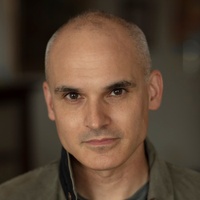
Kaycie Hall grew up in Jackson, Mississippi and now lives in New York City with her sons (a boy named Henri and a chihuahua named Walter). She is the translator of Isabelle Nicou’s Stricture and the author of Disenchanted, a book of essays on disillusionment.
Conversation
On learning to connect ideas
Writer Kaycie Hall discusses motherhood expanding creativity, working a full-time day job, and the importance of independence.
As told to Diana Ruzova, 3595 words.
Tags: Writing, Adversity, Focus, Day jobs, Family, Independence.
When did you first realize you were a writer? What about writing do you think suits you?
It took me a long time to realize that I was a writer. I was always a very prolific reader, and I was really drawn to the arts. But I didn’t really know what I wanted to do, even when I was in college. I had dabbled in journalism. It was my dad who said, very matter of factly, “Oh, I always thought you would be a writer.” Up until then it had never occurred to me. I was like, “Yeah, that makes sense.” I don’t know why I had some sort of mental block there, but I did.
I’m a very interior person. I live very much in my own mind. I think writing helps me live with that and enjoy it, lets me make something from it.
I’m curious about your relationship with creativity. How has it changed since you became a mother? How has it changed since your divorce? What role does creativity play in your life now?
I actually feel like I’ve become more creative since becoming a mother, the amount of time I have is less, sure, but I have more ideas. I think it’s because you’re looking at the world through a different lens. It’s interesting. I always thought I was good at noticing until I had a little kid in tow, and I was like, “Oh, now I’m really good at noticing because he’s noticing and he’s asking me all kinds of questions.” I also find him to be—all children to be—so creative, the way that they’re looking at the world, and the kinds of questions they ask. I keep a little notebook where I write down things that he asks me or says to me that I find to be really poetic.
Since my divorce, my creativity has also expanded. I don’t mean for this to be a dig at my ex-husband. I think partnership is different for everyone, and maybe I am just at a time in my life, or maybe I am a sort of person where partnership kind of stifles my creativity. Not that it’s even asked for by my partner, but I have this need to take care of everything, which just takes away all of my time. Of course, it’s different with my kid. I brought him into this world. Taking care of him and raising him is a creative endeavor to me. But in a partnership, I found that I was almost burying myself. Being divorced, I have more time now for me.
Has being divorced impacted your productivity?
It’s only me making the rules, right? Like there isn’t another person. I mean, there’s my kid. I have him half of the time, but then there’s times I don’t have him, and I get to decide what I’m doing with my hours. I was worried it would be harder because I would be doing everything by myself instead of divvying up household stuff. But no, it’s not harder. It’s easier. At least that’s how it’s been in my experience. I’m the only one who has to be pleased here.
Seems like you’re thriving. Is there anything that your son said that you’ve written down that was so profound it floored you?
So both of these happened when I was putting him to bed. I was in the process of leaving his room after bedtime stories and he called me back into his room. He asked for a hug and he said to me, “Here’s a tiny hug. It’s tinier than you. Put it inside of you and then when it comes out it will be a ring for you. I want you to have a million rings and never give them to anyone else.”
The other instance he called me back into his room, and I was like, “What’s up? You need to go to sleep.” And he was like, “I want to hear your heart beating.” And so I hugged him, and then he said, “When I was inside of you, I could see your heart.” And I was like, “Oh, what did it look like?” And he said “It was red and peach, but mostly it was silvery.”
Your debut essay collection Disenchanted is about disillusionment in its many forms: romantic relationships and friendships gone wrong, miscarriage, withdrawal, how did you go about finding the connecting thread?
I actually didn’t set out to write this with a connecting thread. I was just kind of writing towards wherever. In my second semester of my MFA at Bennington, Jenny Boully pointed out to me that my work was about disillusionment. “It’s disillusionment and disappearance,” she said. She also brought up this idea that my writing reminded her of Joseph Cornell boxes, where there’s this little collection of things [like a collage or diorama]. Once she said that, it all tied together for me. I could see the thread to guide me through finishing the seam. There were other essays initially in this collection that we ended up cutting because they did sort of fit, but they almost felt like something different. For another book.
Your work also centers around fairy tales, a subject you studied closely in grad school. What is it about fairytales that first drew you to them? Is it their magical, often dark elements and clear distinction between good and evil? Or something else entirely? Why do you think they have prevailed?
What always drew me to them was the dark elements. Growing up I had this collection of books in my room that were my mom’s when she was a kid. I still have them. They’re in a prominent place in my apartment. They’re hardback, and they’re called things like “tales of heroes, tales of fairies,” all fairy tales from various countries grouped together. My parents let me read them when I was a kid. I had free rein, I could read whatever I wanted. They never questioned it. I had these books that were supposed to be for children, and then I would read them, and they would just be these horrible, gruesome stories. I just couldn’t get enough of them.
In our culture, we don’t really let kids have that kind of stuff, but kids actually are the best audience to handle those sorts of things. They look at it with a fascination. “I am learning something from this.” Like it’s a little scary, but it’s intriguing. That is the staying power of fairy tales. A lot of the original ones are so bare bones. They are perfect for adaptations.
You are also a French translator, what have you learned about writing from translating other people’s words?
I was thinking about this earlier because I am in France right now, and I was thinking about Isabelle Nicou, whose book I translated, and some of the references in there. The thing I learned most from that process was about following these lines of research and interest. I like to incorporate those into my own work because when I was translating I would go down rabbit holes about something that maybe I knew at base level, like some of Freud’s teachings, but in order to translate it, I felt I needed to really understand it. I would say to her, “I’m not sure I quite know what that is. Let me make sure I understand.” Then I translated it. Translating that book introduced me to so many films and literary references and things that I hadn’t known about before, and I was like, “Oh wow, it’s really fascinating to see that you can do this. You can take all of these things that you’ve gathered in your brain that you’re interested in and just sprinkle them throughout your writing and then, you know, lead someone else down this trail.”
That’s one of my favorite parts of writing. The gathering of information to eventually disseminate into your work. The note taking. It’s the best, the most fun part. If you’re a person who likes to gather, you should probably write. I know you’ve worked in tech and have a very corporate job. Has the stability helped or hindered your creative pursuits? How do you manage to write and have a corporate job?
I personally think stability has really helped me. I am very lucky to have always had very supportive managers in my day job. So, when I wanted to get my MFA, they gave me a little extra flexibility. I’ve been very fortunate in that regard, but I also think it really took a lot of pressure off of me to know that my paycheck was coming and I have health insurance, especially now that I have a kid. Certainly there are times when it feels a bit soul crushing, and you kind of resent that you have to spend 40 hours doing this, when my brain wants to wander into this other area.
I do try to actually bring my real self into my day job. People at my job know that I’m a writer, that I’m a translator. But I also try to be present at work. I’m always noticing interesting things that people are doing. A corporate job is fascinating in some ways. The liminal space of an office. And so I’m trying to keep that part of my brain active, while also sending “as per my last email” emails.
Always always taking notes.
Always taking notes.
There are days when I’m very frustrated with it, but overall. I’ve been very grateful. If you’re getting into this world where you’re trying to balance both, there will definitely be ebbs and flows. Sometimes your day job might be really exhausting or take too much space in your brain, and when you notice that happening, you have to call yourself out on it and be like, “Well, what do I do to rebalance this?” But it’s definitely possible. Would I love it if I could just write and create full time? “Yes.” But sadly, we don’t live in that world.
We should all move to Canada where they respect their artists.
Not to go on too much of a tangent, but I thought endless time would be really beneficial for me when I finally gave it to myself for a short while. And surprisingly, I needed the restraint of work because if you have endless time you’re constantly freaking out about money, and then you can’t be creative. Your brain can’t stop trying to figure out how to get that paycheck.
Yeah, absolutely. So having that security can help free up some space.
When you’re not writing, you’re embroidering shirts for your son, even making a textile book. Why is it important for writers to do other things?
My mom was an artist. So I grew up in a household where we were always encouraged to make things. I’ve always gotten a lot of satisfaction out of making things with my hands, whether that’s baking or sewing or little craft projects. It helps stimulate my brain, especially if I’m feeling stuck. I know this is different for everyone, but writing feels very painful to me. Having to sit down and do it. It takes me a long time. And while it’s really satisfying when I produce something, there’s something about embroidering, for example, where I can embroider for an hour and have this very tangible thing that I’m looking at that I’m happy with, or I can pull everything out and redo it. I’m making a fabric book right now. It allows my mind to run free, to keep wandering and thinking of things while I’m doing something with my hands. [Writing and embroidery] weave together nicely for me.
My cousin went through a really traumatic event. Her daughter got cancer at a very young age, and the thing that saved her is knitting and crocheting. Like she never went to therapy. This was her therapy.
I do feel like it’s very therapeutic in a lot of ways. And there’s something about being able to see this thing that you made with your hands. My son had surgery this past year, and I was embroidering a sweatshirt for him, while I was waiting for him to wake up. And there was something very comforting about it. If you are a writer, it’s a nice challenge to pursue something else creative and see if that unlocks parts of your brain.
What else (outside writing) inspires you?
What is most inspiring for me is just being out and about, but on my own, and kind of going back to what we were talking about with my divorce and how I kind of thrive with my independence. I find it really inspiring to be out walking around, experiencing the city, looking at other people’s art, listening to conversations, noticing, being on my own with no agenda. There’s nothing that a long walk can’t cure or open up. It just works.
Yes. What’s your textile book about?
So, I have two. One of them is about sad girls. I heard this line in a podcast with Lena Dunham and Alissa Bennett. It’s called The C Word, and there was this line that Alissa Bennett said in the Marie Antionette episode, she was like, “Oh yeah, she’s been reclaimed as a wronged sad girl.” And that just really stuck out to me. So, I built this book around that. It has quotes from Marilyn Monroe, Marie Antoinette, Sylvia Plath and there will be some more personal pages in it. I just made a second one that is going to be all omens. On one side is bad omens, and you flip it over, and there’s good omens on the other side.
I love that. Disenchanted was published by Autofocus, an indie press. What is it about indie lit that you’re most drawn to? I know you wrote a round up of your favorite indie presses a few years ago.
I find that the voices that are being put out by indie lit are allowed to be more imaginative. There’s a lot of great stuff that the major presses have put out that I have loved reading and really enjoyed, so like no shame on that at all. I do remember at one point in my MFA, I was working with Chelsea Hodson, and I was telling her that I feel really stuck, like my mind is stuck, and she was like, “Well, I’m looking at your reading list, and I can see you’re reading all contemporary lit, all coming from these major presses. You need to not just read that.” That was when she recommended Scott McClanahan’s The Sarah Book, which I love. When it comes to indie presses, it’s more of an artistic pursuit than a bottom line capitalist pursuit, like needing to earn out your advance. It’s someone who is passionate about books like Chelsea Hodson or Michael Wheaton.
Ultimately, I read indie lit because I want to support these voices that I’m interested in, this art that I think is beautiful. These presses just have more to lose and are still willing to take bigger risks, which I think is admirable.
How do you manage to write about real people?
I love this question because I also have this question for other writers, and I think everyone has their own approach to it. For me, there are just particular people and relationships that I will always protect. My son being one of them. Not that my son won’t appear in my writing, but I would just be more careful about how he appears. In general, though, if I’m being drawn to write about an experience I had, I’m going to write it, and then afterwards I might decide [what to omit]. It depends on my relationship with that person, right? I don’t ever want to write something out of revenge or spite. If I’m writing about you—even if maybe you’re not happy about it—I’m writing about you because you impacted me very deeply on some level, and, you know that’s a compliment, I think. I’m not going to ask your permission to write about my experience, right?
There is an essay in my book that I wrote about a close friend, and she is someone that I really care about. I didn’t want her to be hurt, and she is one of the few exceptions where I sent it to her first and was like, “What do you think about this? And she loved it and asked that I leave her real name and everything, and that was a lovely experience. I do tend to write about a lot of ex-lovers (at least in this book), and I’m sure they have their own sides, and I would love to read them.
They can write their own books. You’ve experienced so much loss in your personal life, does making art help you reckon with it all?
I think so. I’ve lost both of my parents: my mom when I was very young, a teenager, and my dad very unexpectedly just a few years ago. And I do think making art makes me feel more connected to them. My parents got married very young and had children very young. From things I learned from my dad later in his life, or things I knew about my mom, or things I found in their house after they passed, I learned that they gave up a lot of their own artistic ambitions and dreams. And so I do feel like they would be proud that I’m making time for this, and it makes me feel connected to them.
What is your relationship with being perceived?
I really don’t like being perceived.
Is that why you write about yourself? So you can be in control of the narrative?
I think so, but I also think when I write about myself, I become a character. I forget who I was telling this to the other day, but I tend to be very interior, and I have a dog, and I live in New York City. Obviously, my dog needs to walk very early in the morning, and I often will just walk him in a nightgown that sometimes I’ll throw a sweatshirt over. And for some reason, my assumption is always that I cannot be perceived. No one can see me. And then someone will say good morning to me, and it disillusions me.
The you that’s putting your art out there and has to promote it and talk about yourself, that’s not really you. That’s a version of you. The real me can’t really fully be perceived outside of my control, right? Because it’s in my own head. Does that make sense?
Yes. There’s a comfort in that. A lot of people are afraid to write about their own lives because they’re afraid to be so exposed and over-perceived, and they fear that people are going to misinterpret them. But it’s impossible for anyone to truly know you.
Exactly. It’s not your full self. Only I can choose to give you that. And even that will never be complete because your full self is constantly changing and evolving.
What advice would you give other writers writing about their lives?
Be true to whatever is in your gut. Write that down as your first draft. Don’t think about how this makes you look, or what that one person might think. Ask yourself: “What’s driving you to tell this story?”
What advice would you give your past self?
I would have given my past self a lot of dating advice for sure. I don’t think I would have listened to it. I would tell myself to worry less and just live more. Stop worrying about meeting X milestone. In my 20s I never gave myself credit for the things I had done, I moved from Mississippi to Paris and then back. Mississippi to New York City. I was taking writing workshops while working full time. I would go back and tell my younger self to just enjoy what you are doing. Life is pretty great.
It’s so hard when you’re wrapped up in your own head, and feel like you’re “behind” whatever that means. Your 20s are just so dense.
You’re never really behind, right? Life is going to give you the cards that it gives you, and you just have to figure out how to play them.
How to embroider your own book.
Yes.
Kaycie Hall recommends:
Don’t Look Now (1973), an incredible film with one of the longest strangest sex scenes that frankly I believe not enough people have seen
Alissa Bennett’s Dead is Better zines. It is one of my life’s tragedies that I lost all of my copies in a move
Yvon Lambert gallery, bookstore and publishing house in Paris
Listening closely to children. So many of the things that they say are accidental poetry, I keep a document of stories, remarks and questions from my son. It’s a gift
Walter De Maria’s The New York Earth Room in Soho Manhattan, or as my son calls it “the dirt room”
- Name
- Kaycie Hall
- Vocation
- writer
Some Things
Pagination